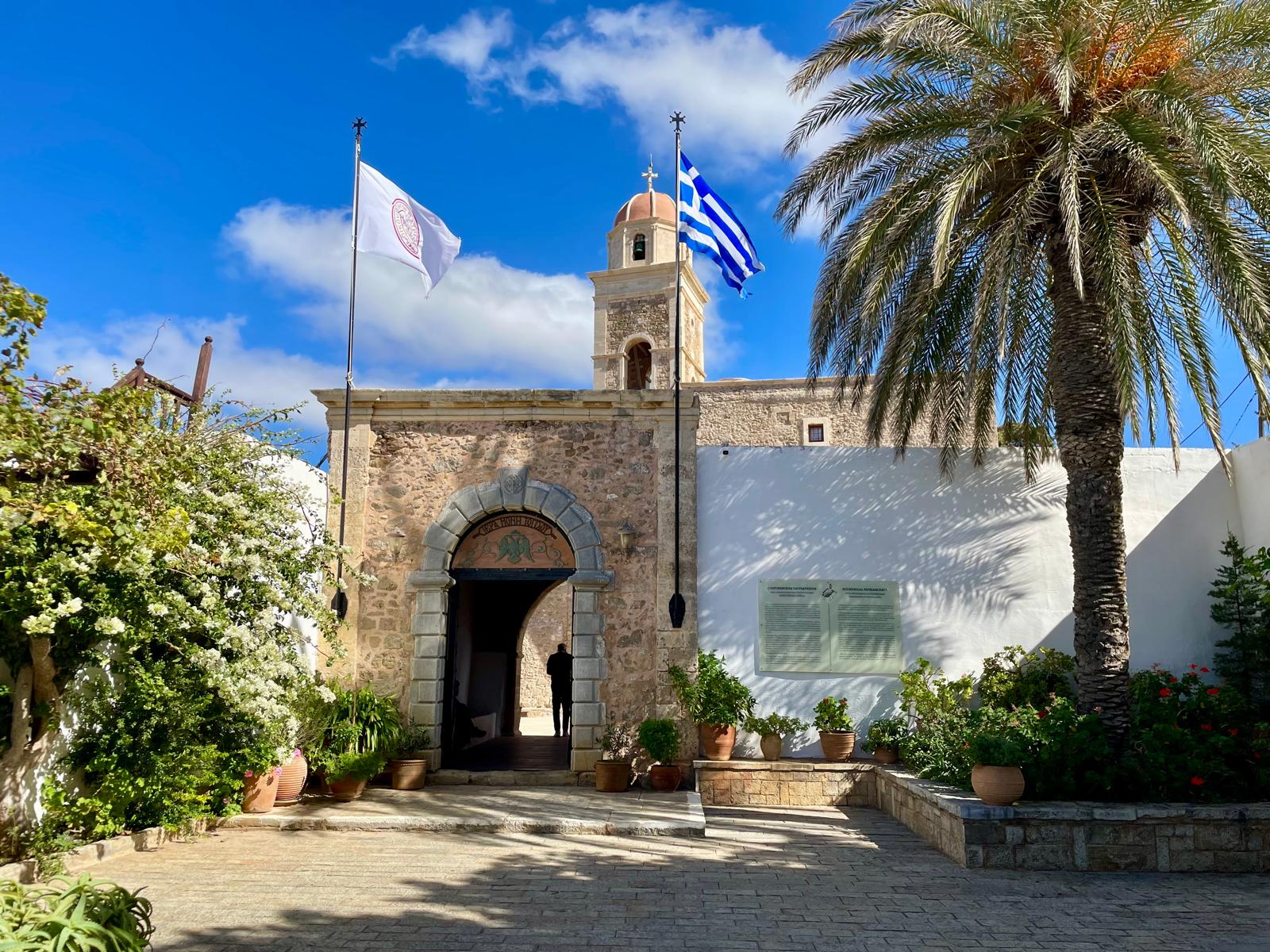
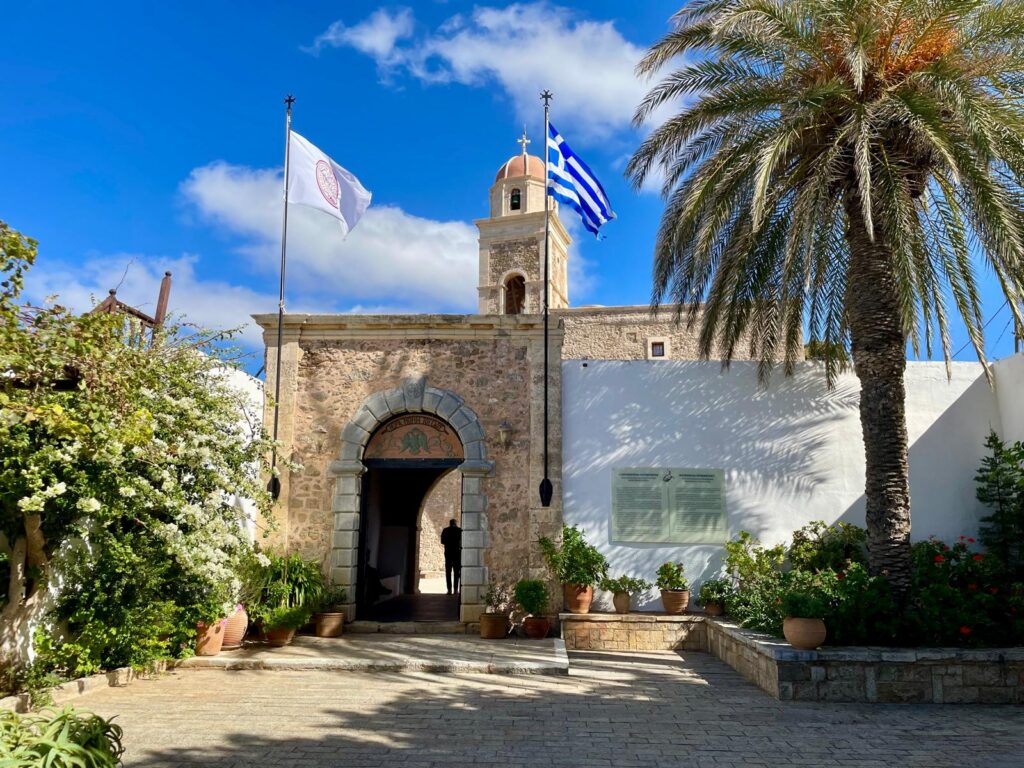
Toplou Monastery is a jewel among the places worth visiting in the far east of Crete. This powerful monastic complex stands on an almost desert like plateau. It is an important site in the island’s history and today a key destination for visitors, as well as one of the most dynamic local enterprises. It is the only monastery on the eastern tip of Crete preserved in such excellent condition.
The full name of the monastery is “The Monastery of the Virgin Mary of the Cape” (gr. Μονή Παναγίας Ακρωτηριανής). The commonly used name “Toplou” was given by the Turks (the word top means “cannon”). The monastery was a true fortress, equipped with its own artillery, and the monks were trained to defend it. Thanks to this, they successfully repelled pirate attacks along the Cretan coast. It was one of the wealthiest monastic communities on the island.
The exact date of the monastery’s foundation is unknown, but it certainly existed during the Venetian period. In 1530, it was plundered by the Knights of Malta, and in 1612 it survived a powerful earthquake. The Venetians helped rebuild it, recognising the strategic value of a fortified outpost in the face of the growing Ottoman threat. In 1646, eastern Crete was conquered by the Ottoman army. The monks returned only after 1704, when the Turkish authorities allowed the monastery to function again.
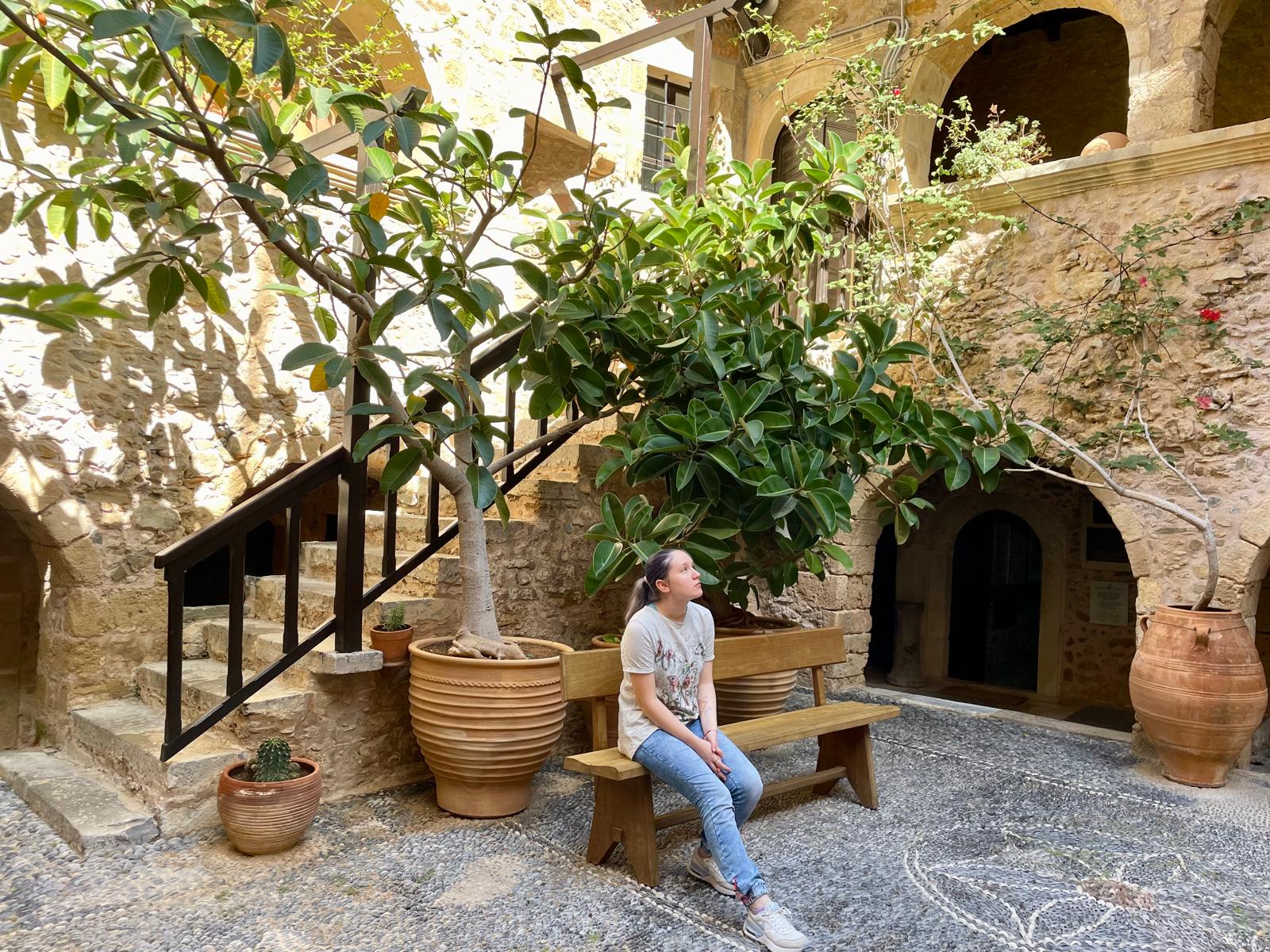
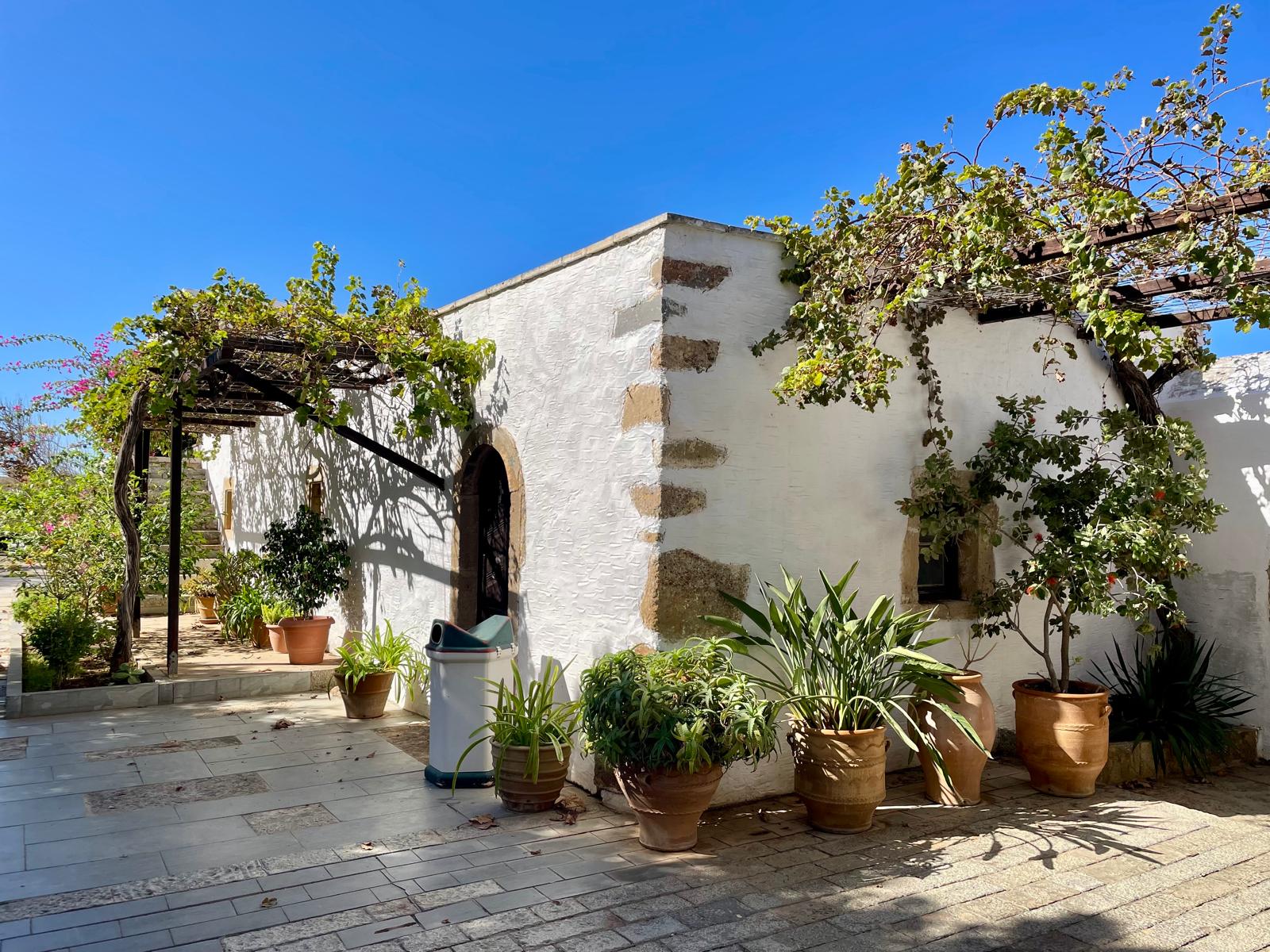
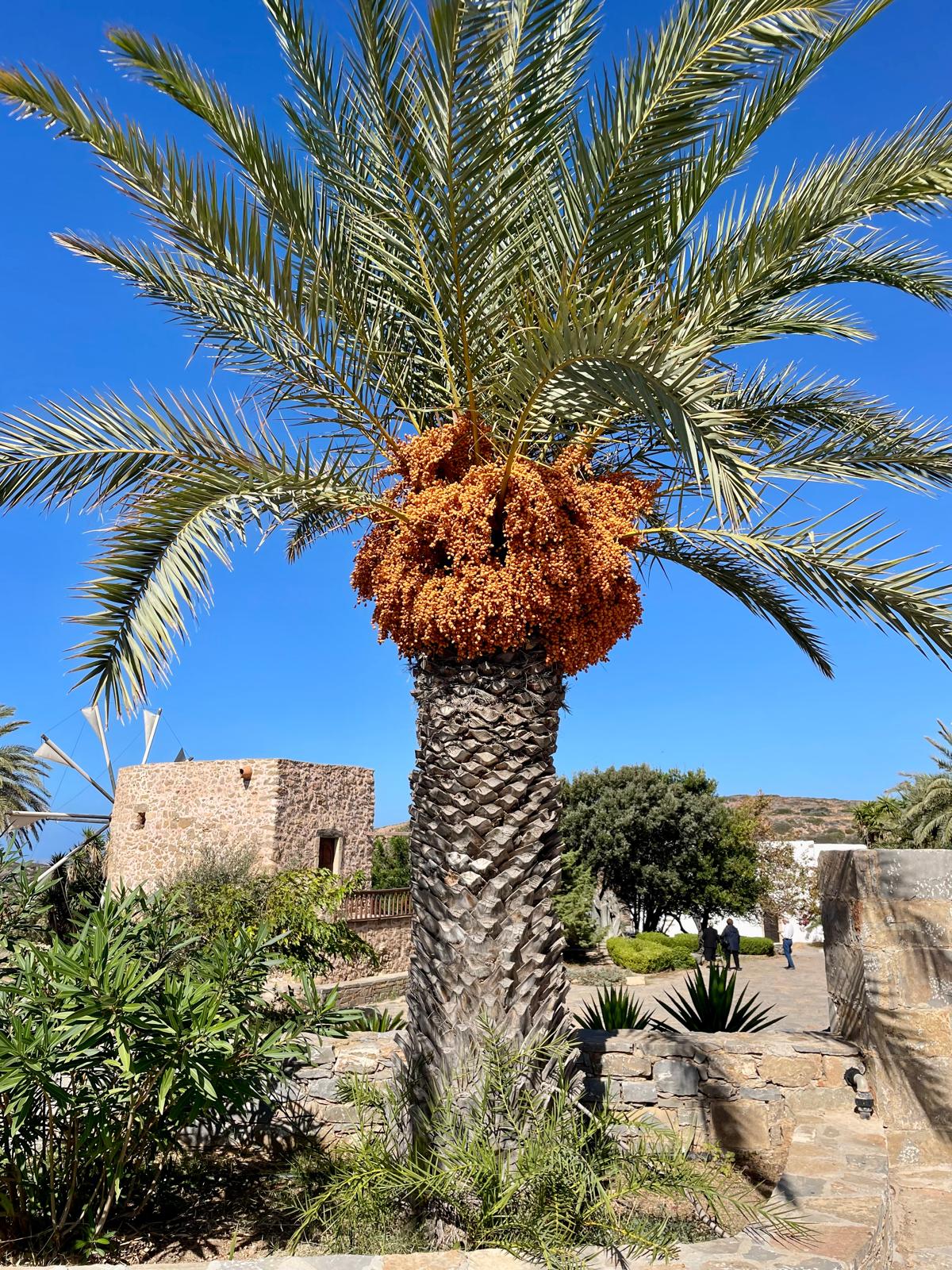
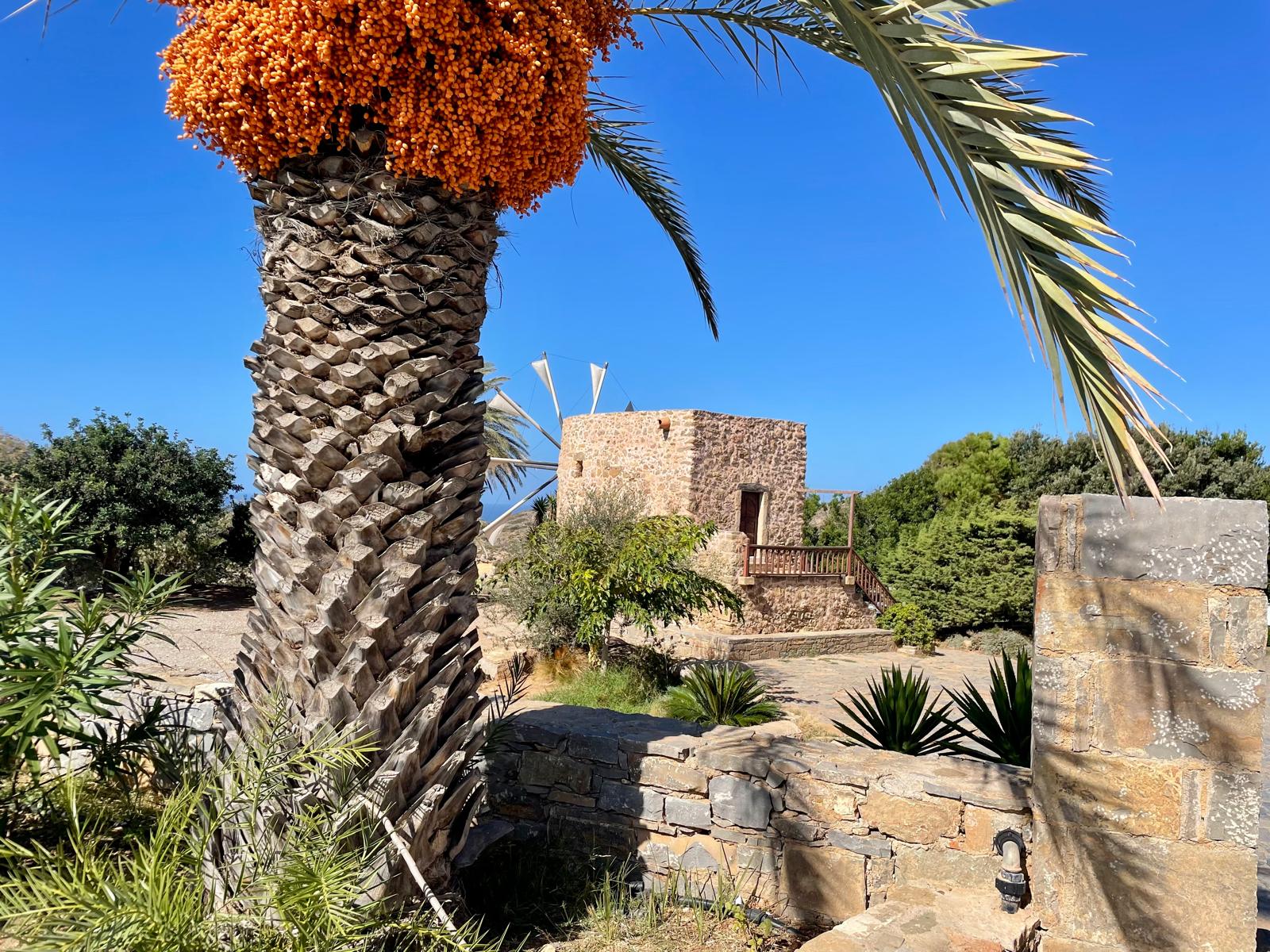
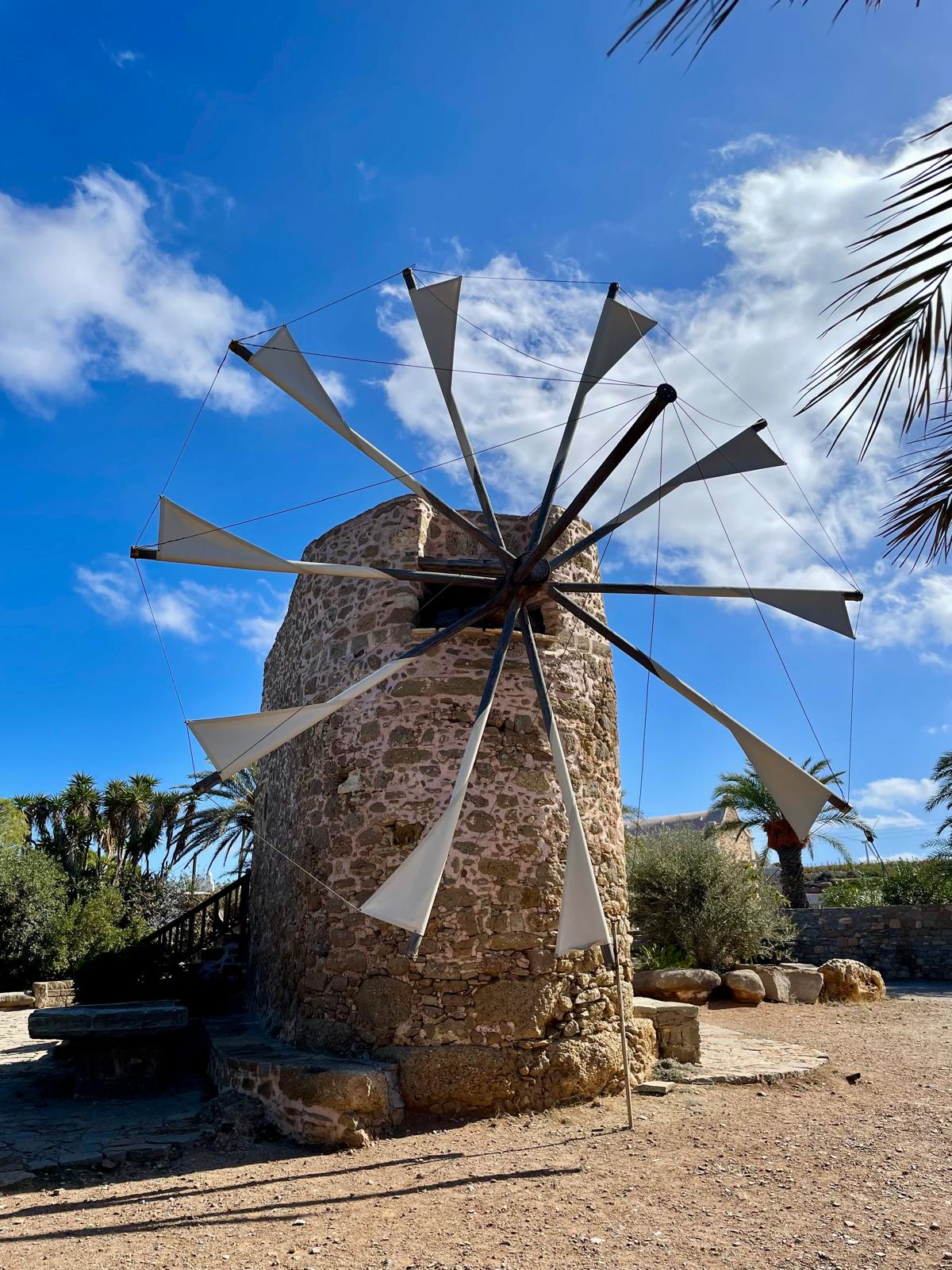
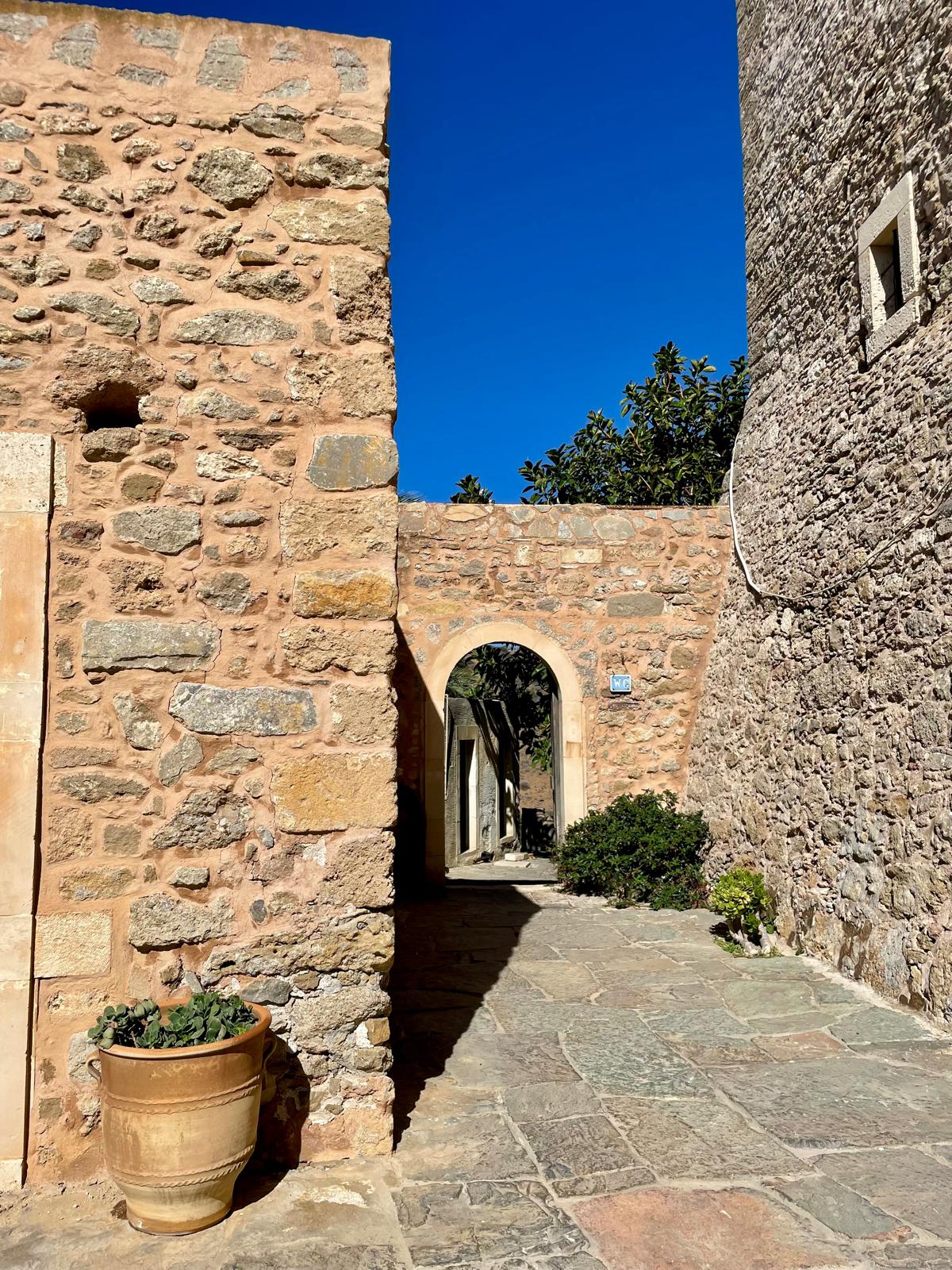
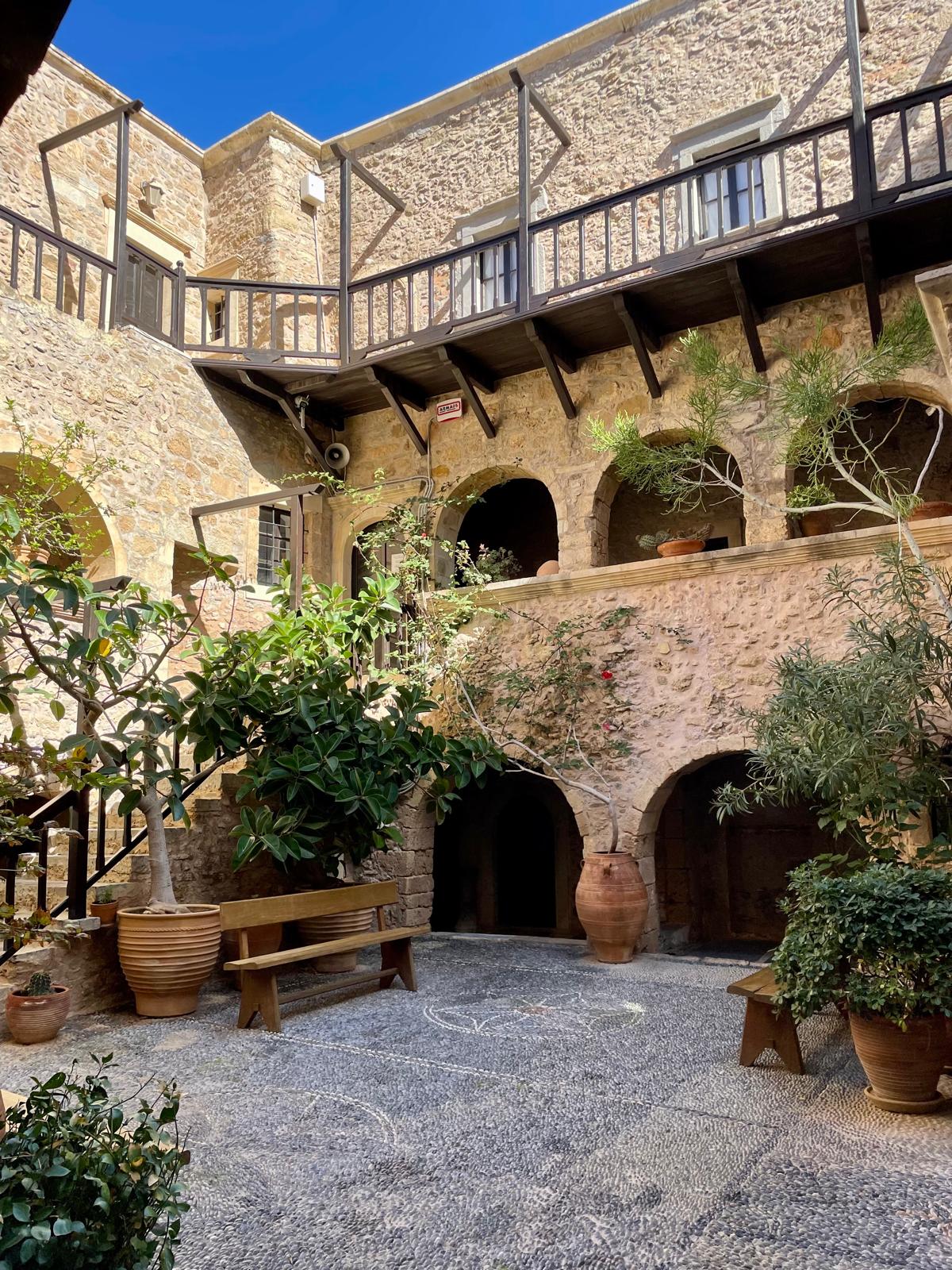
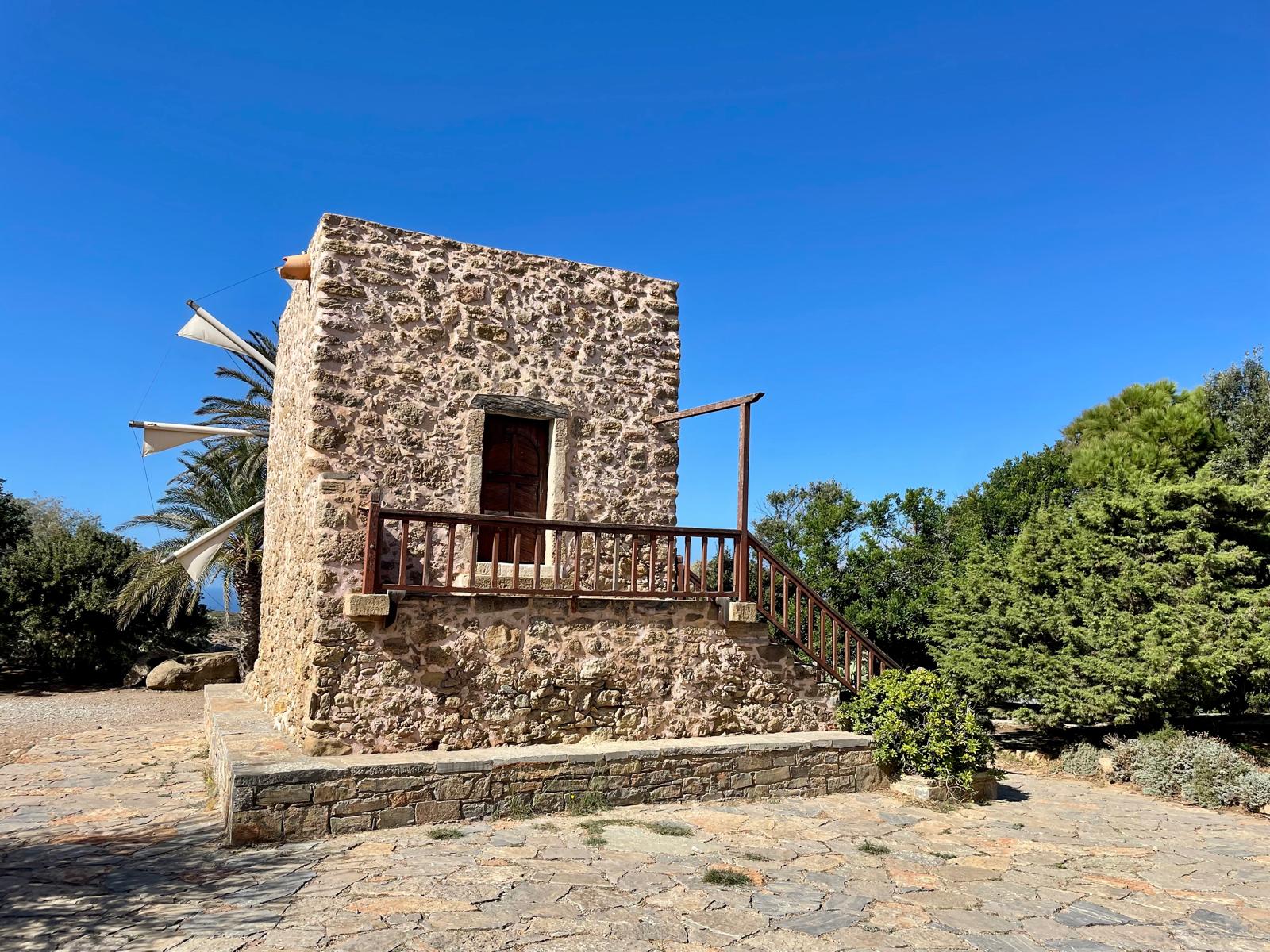
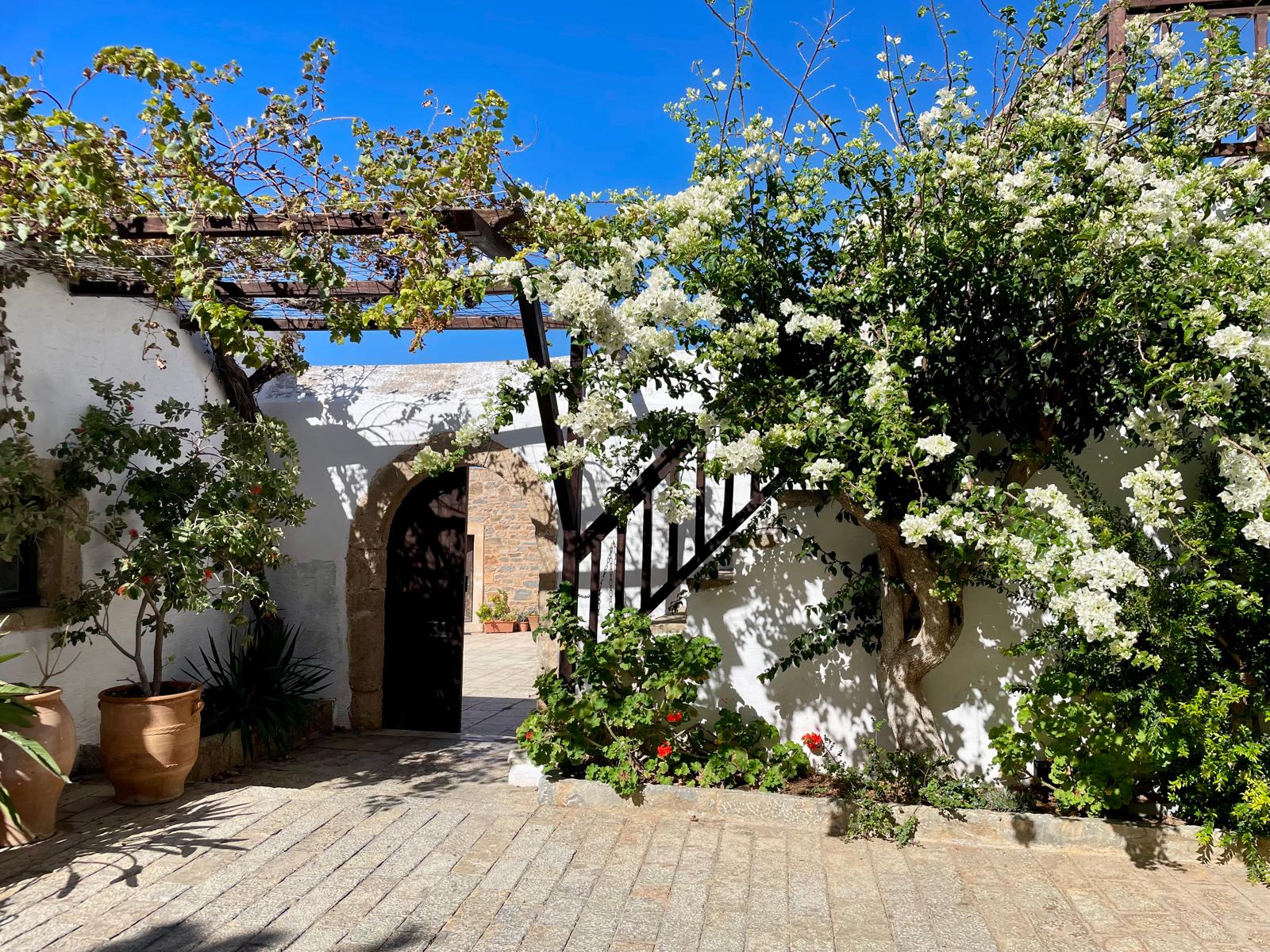
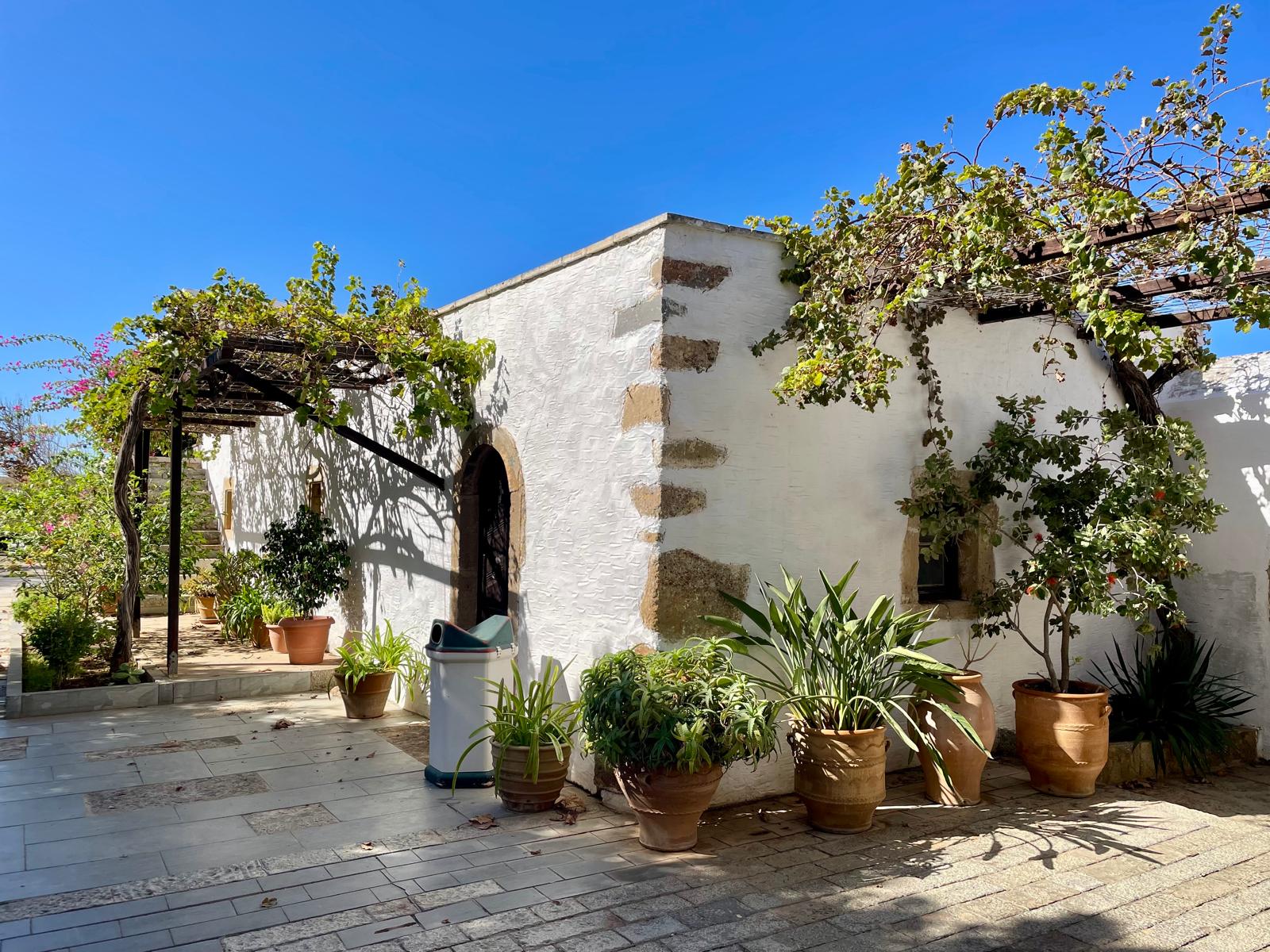
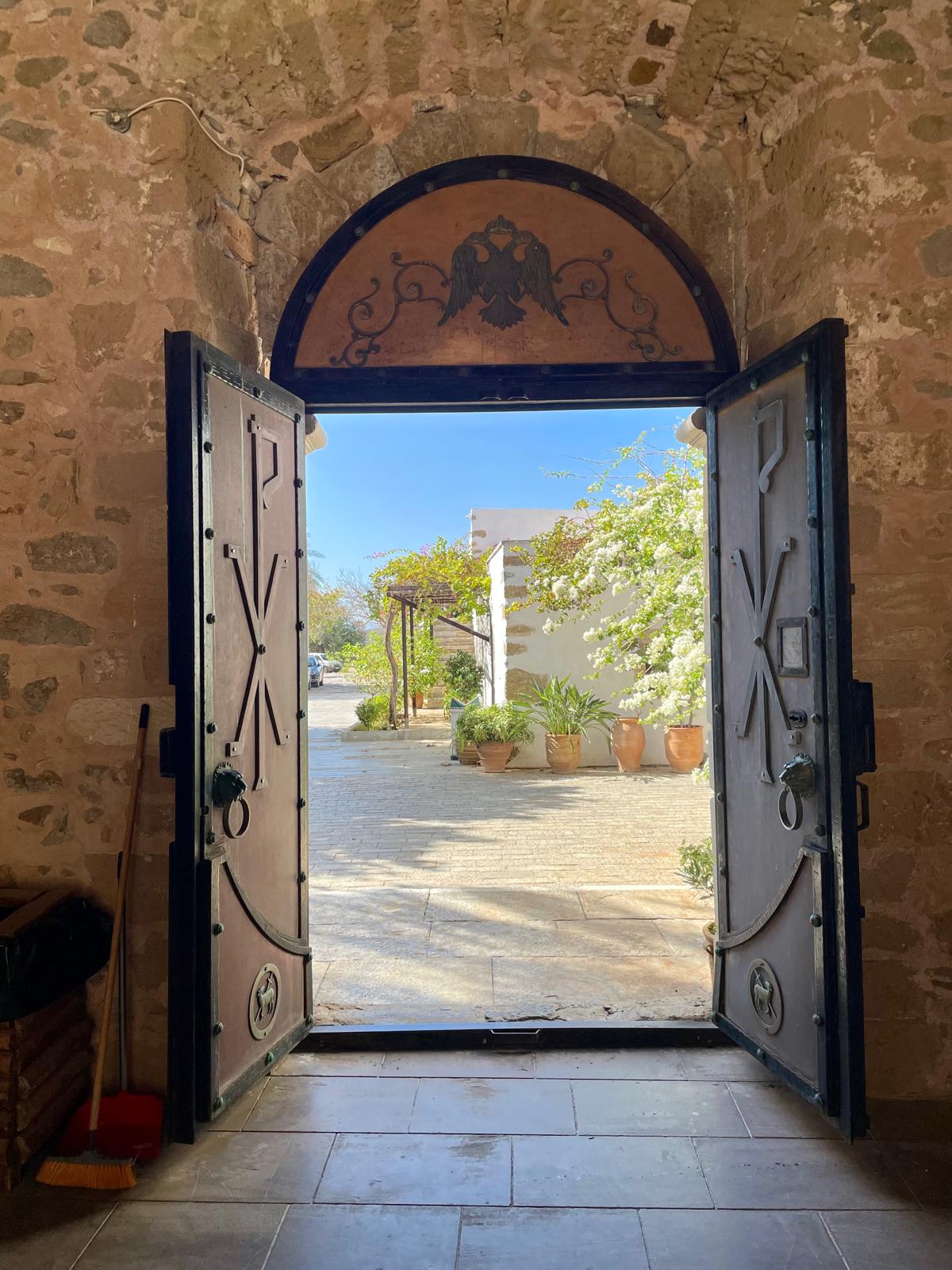
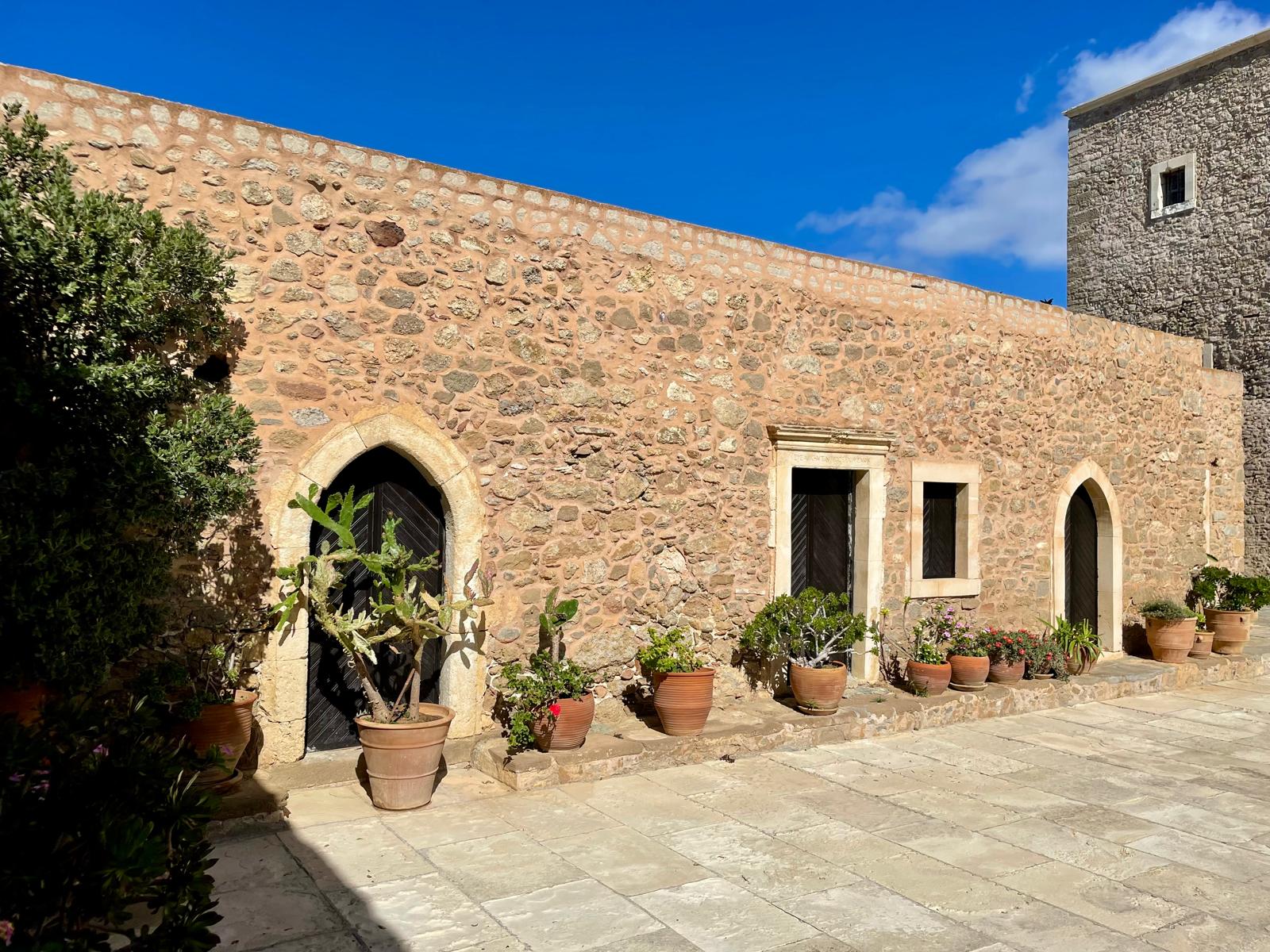
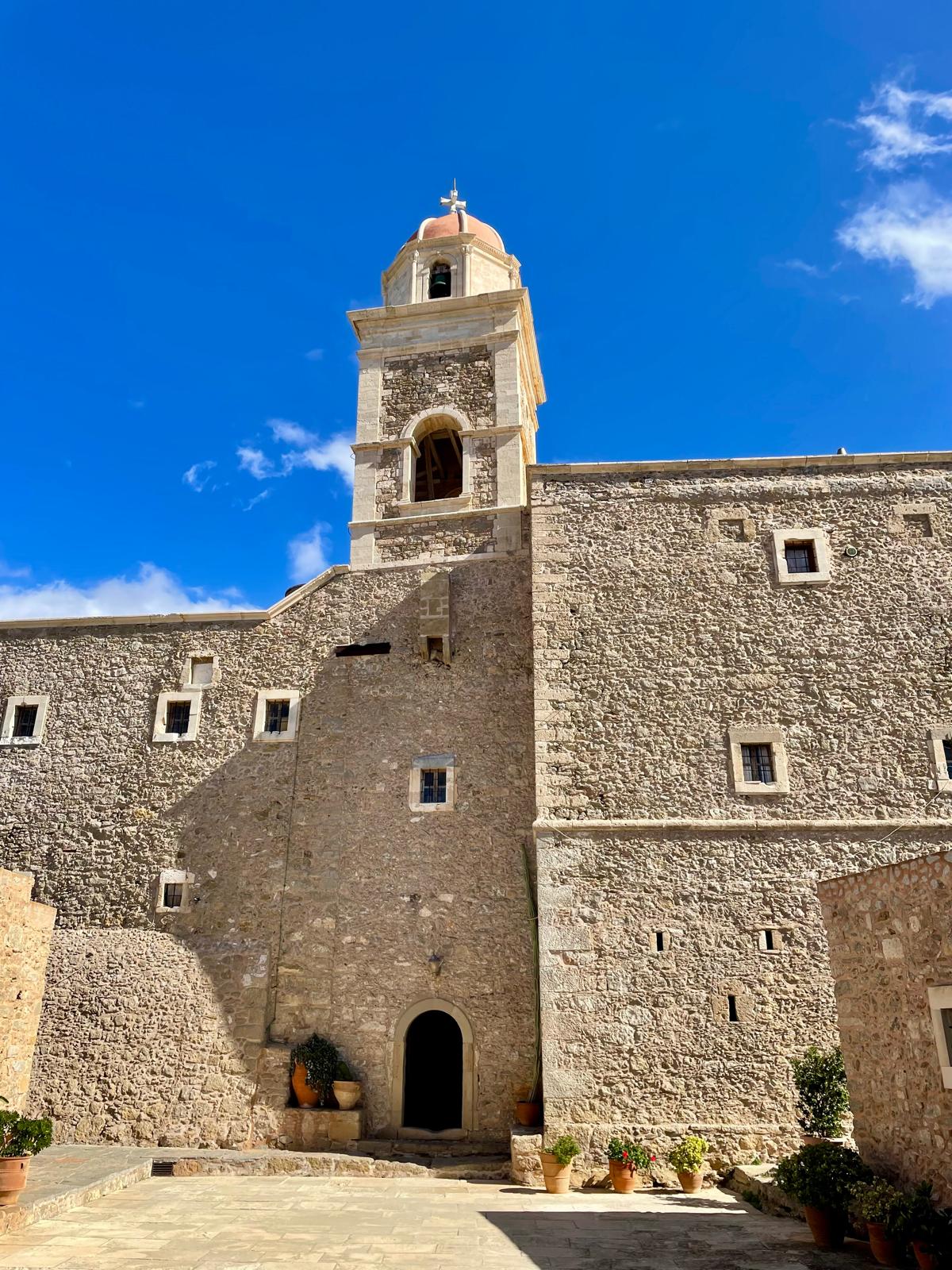
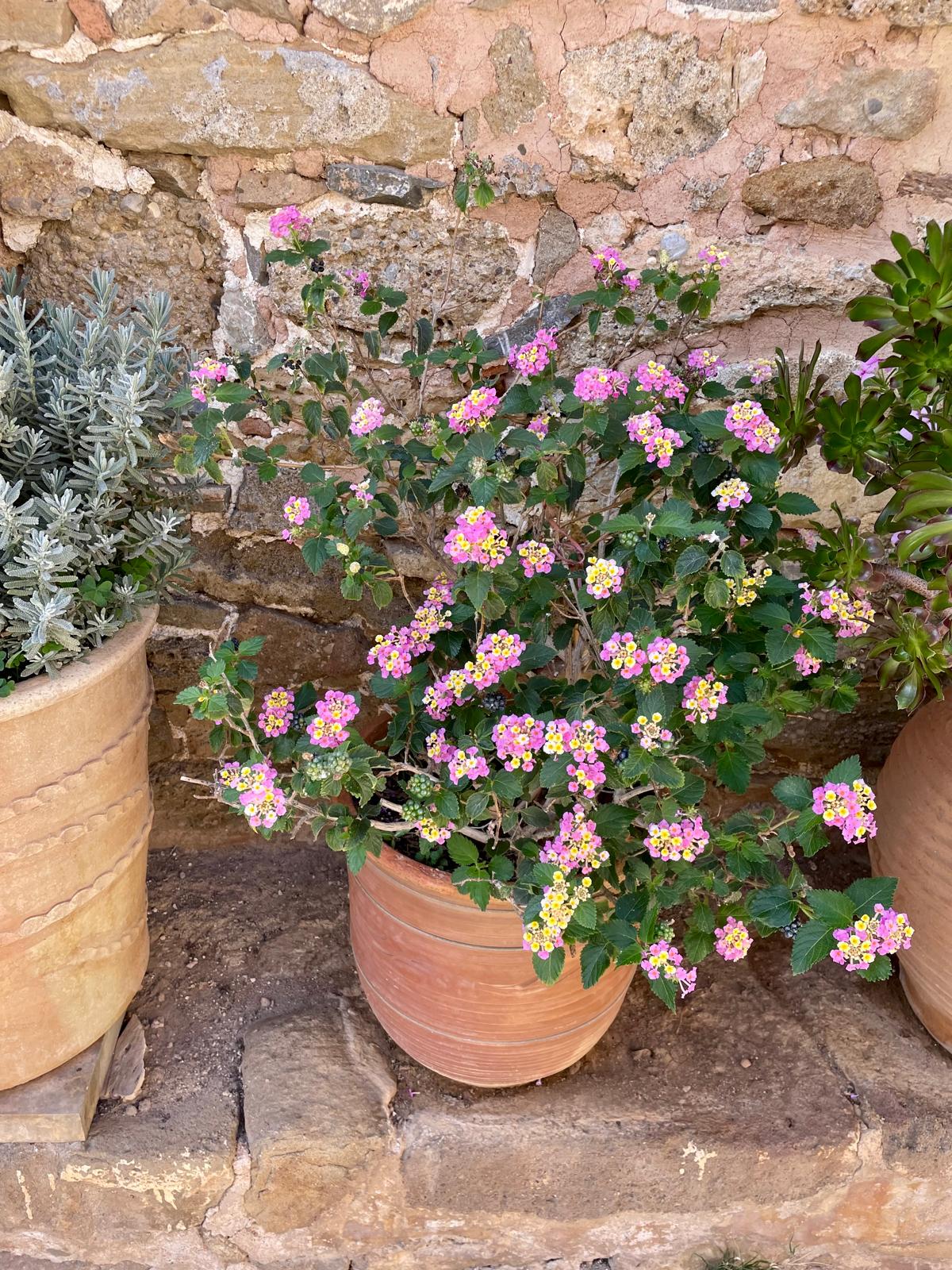
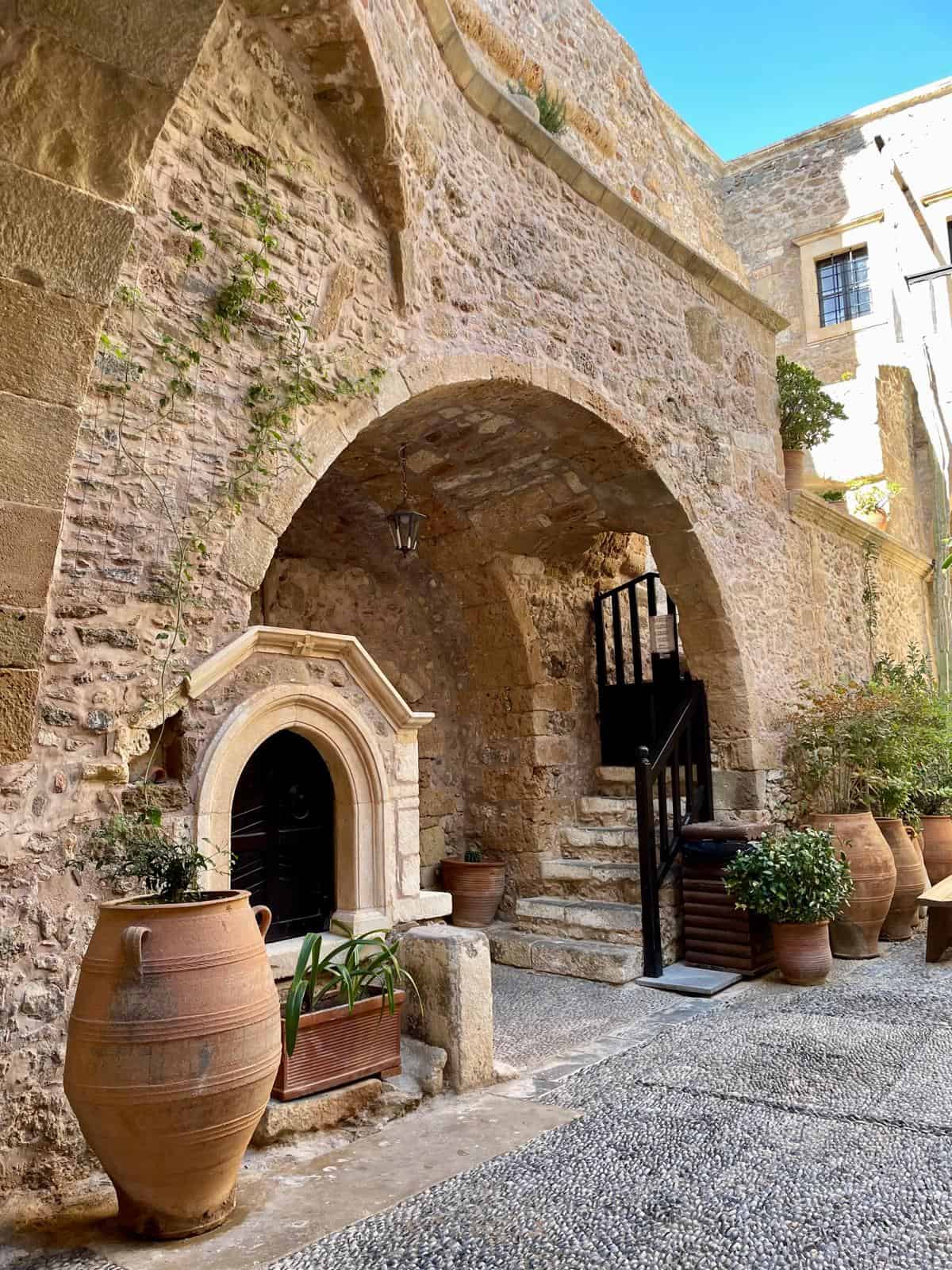
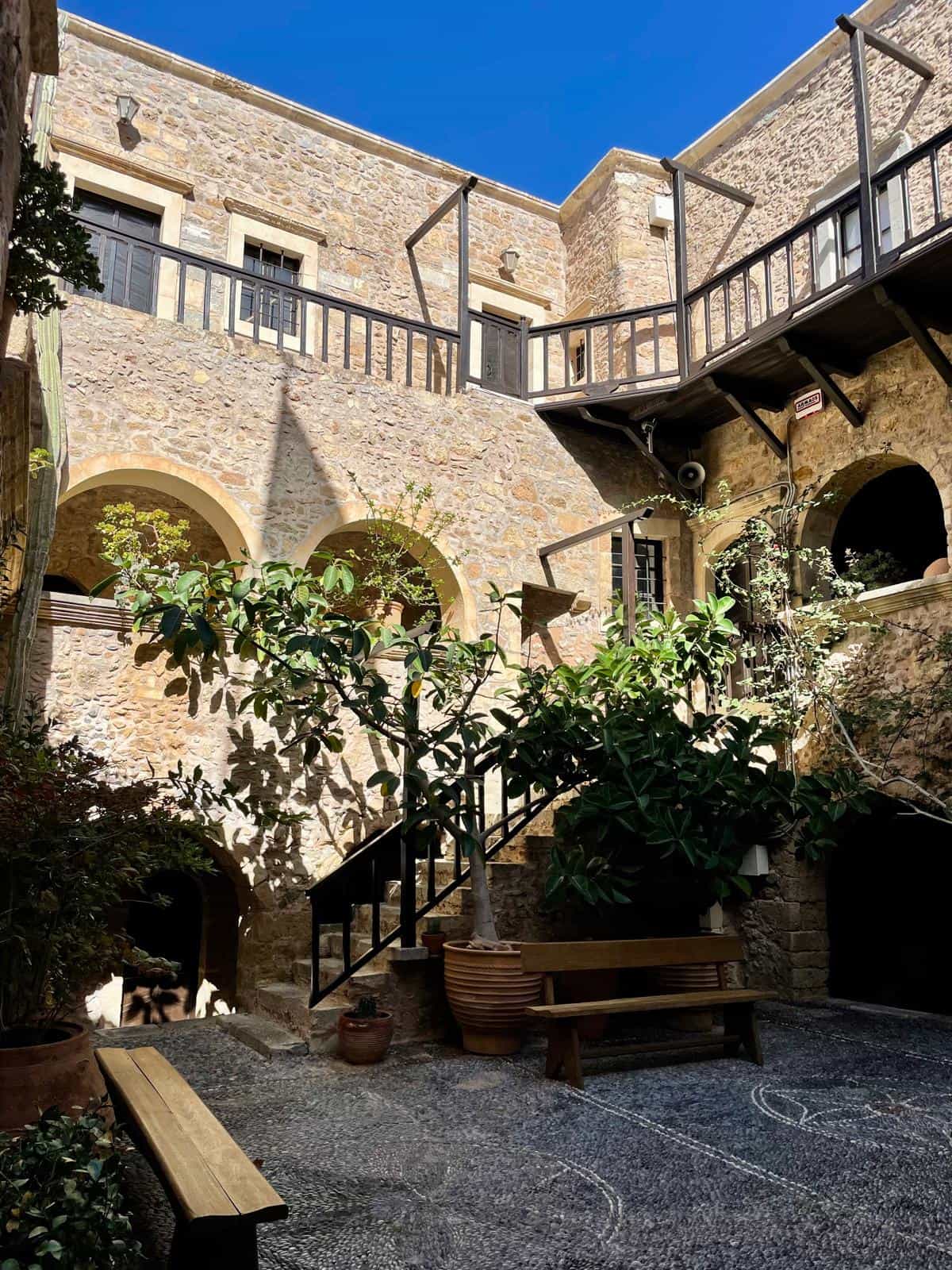
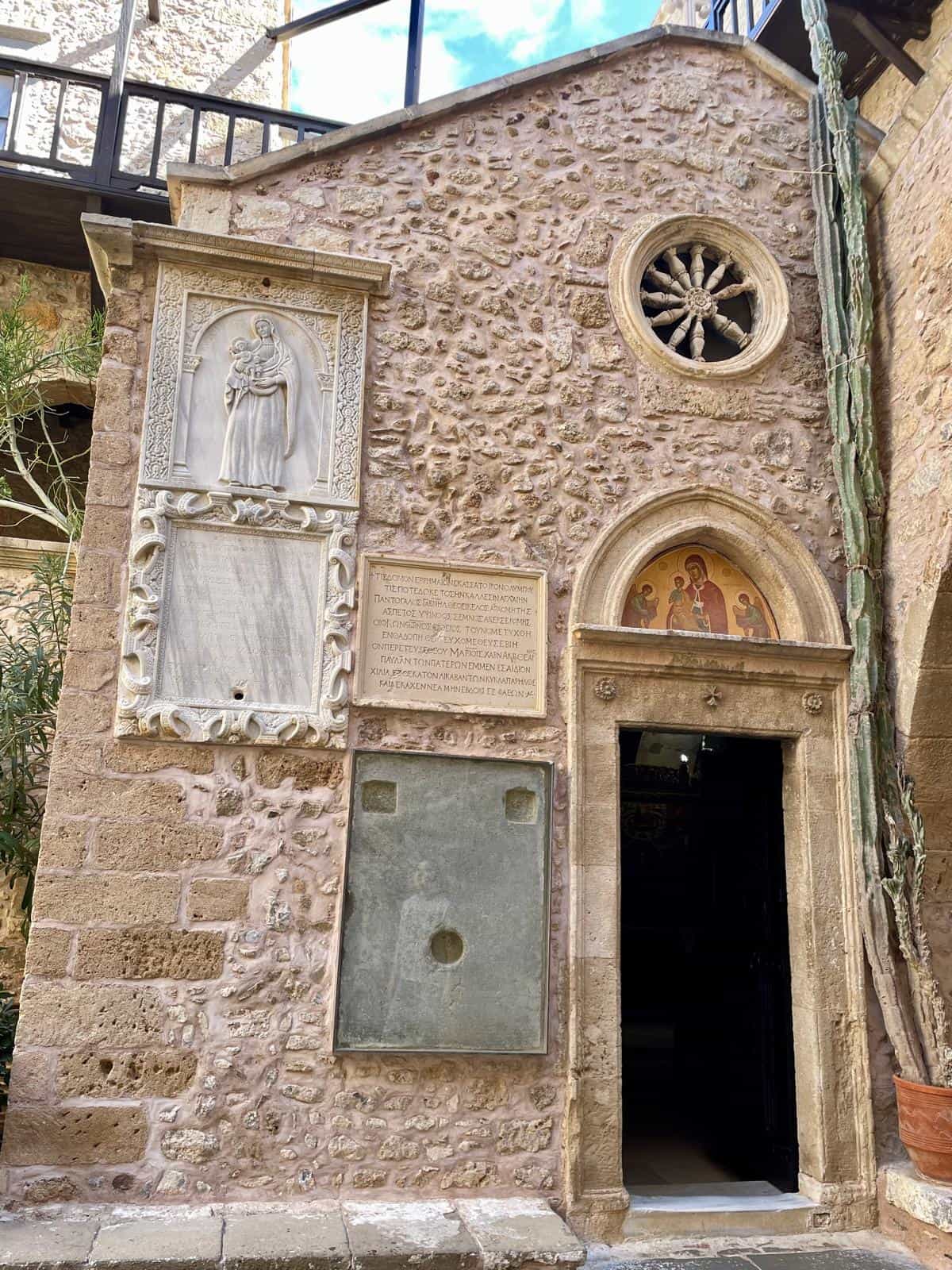
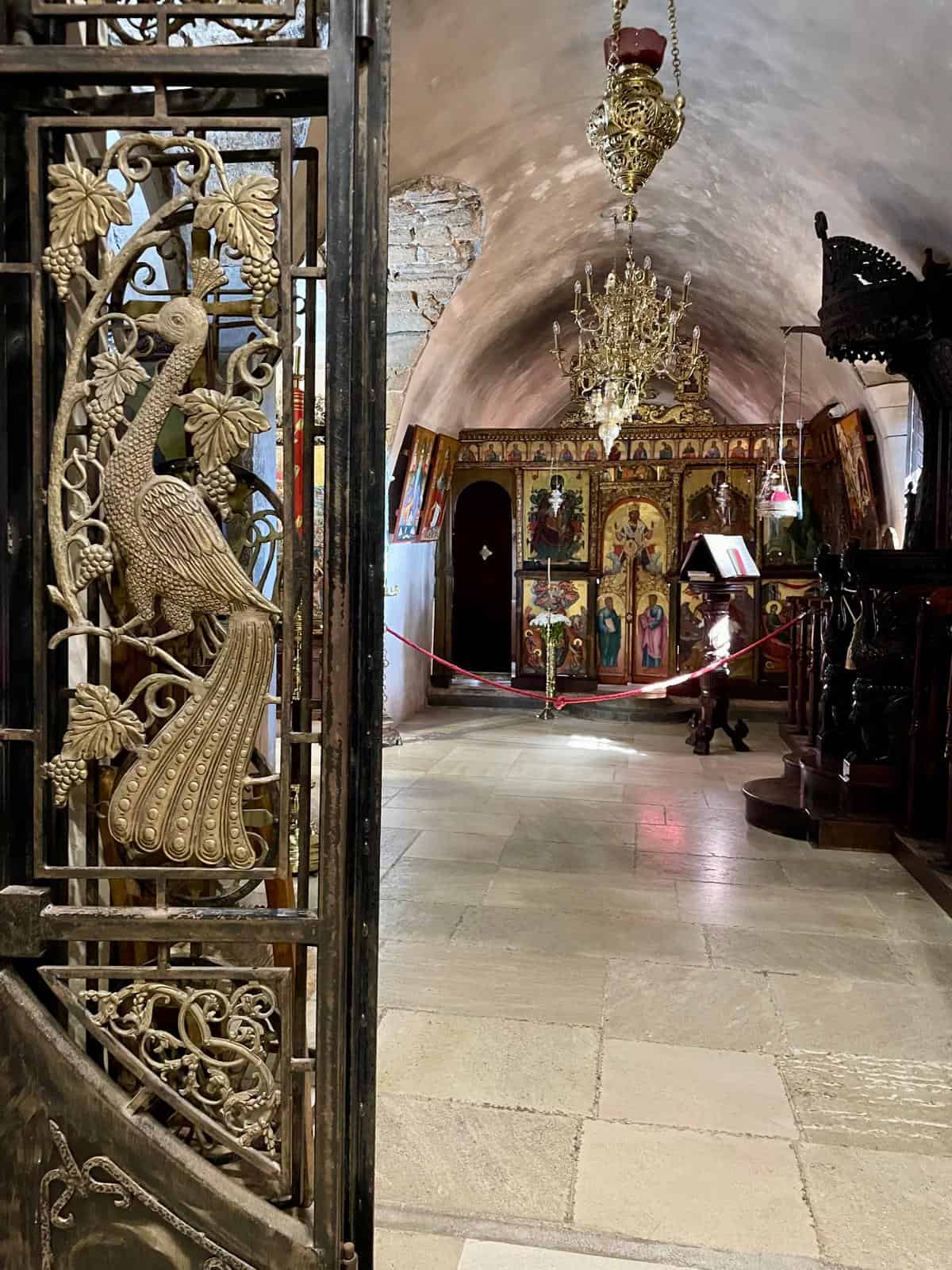
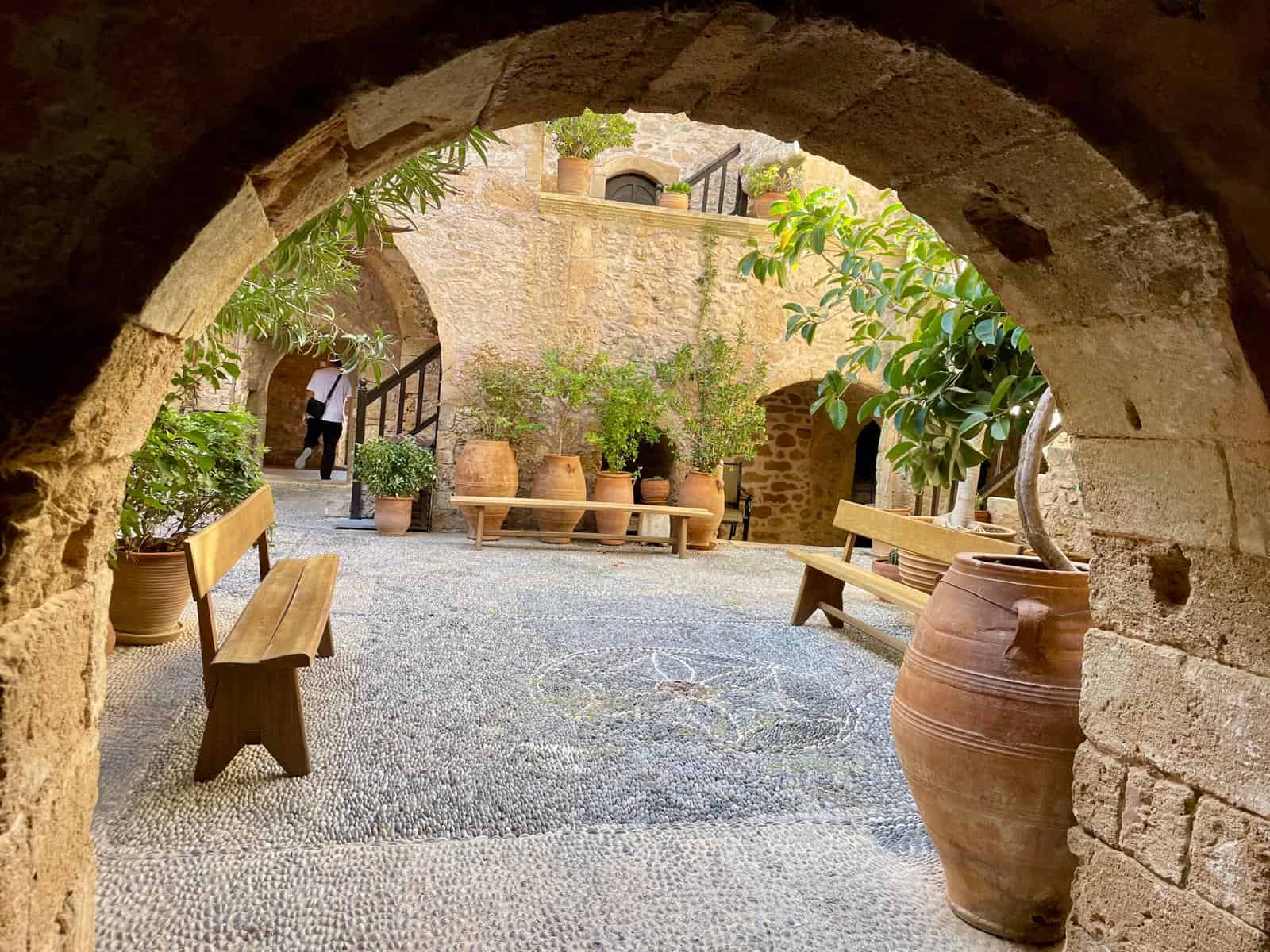
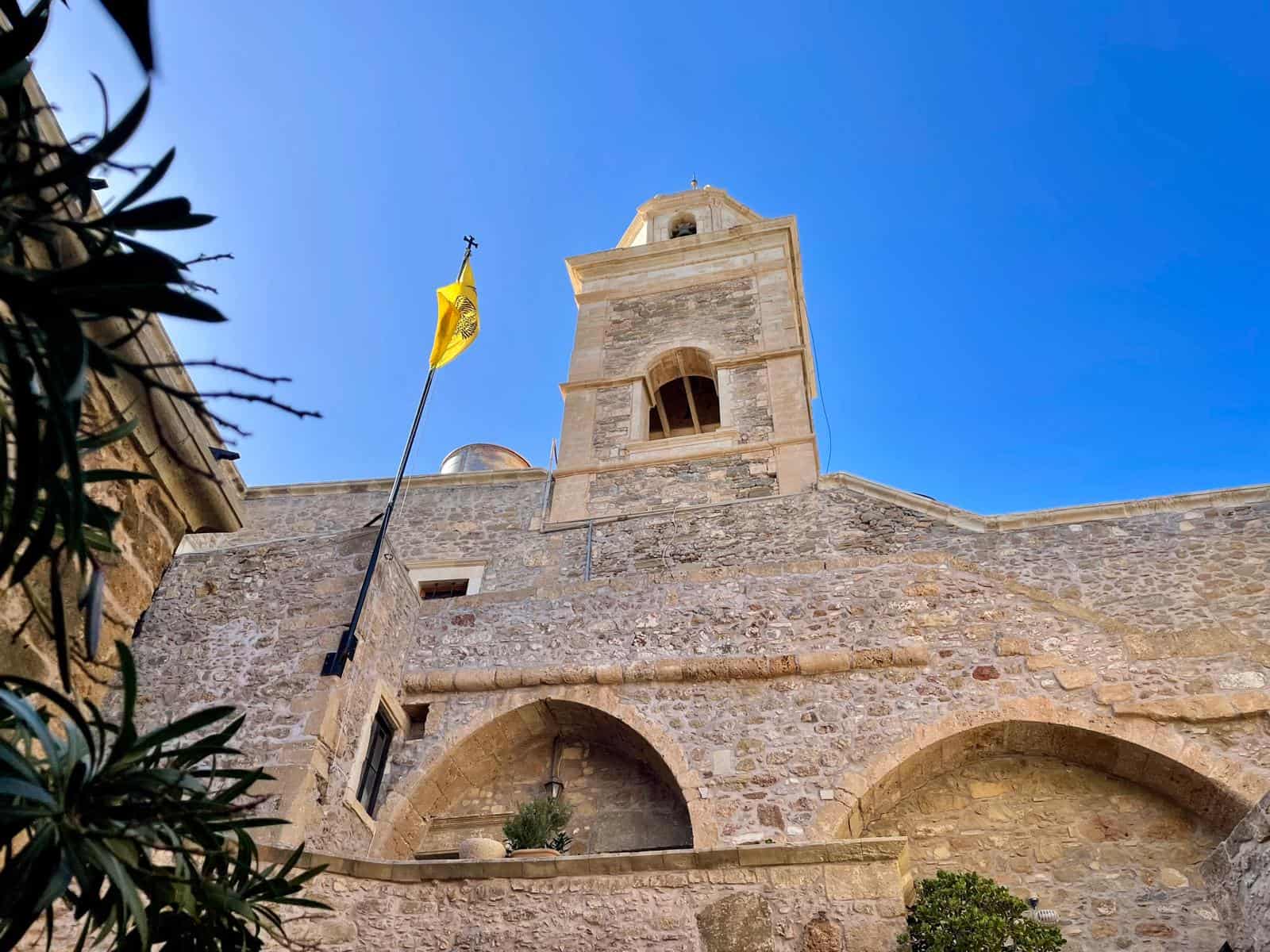
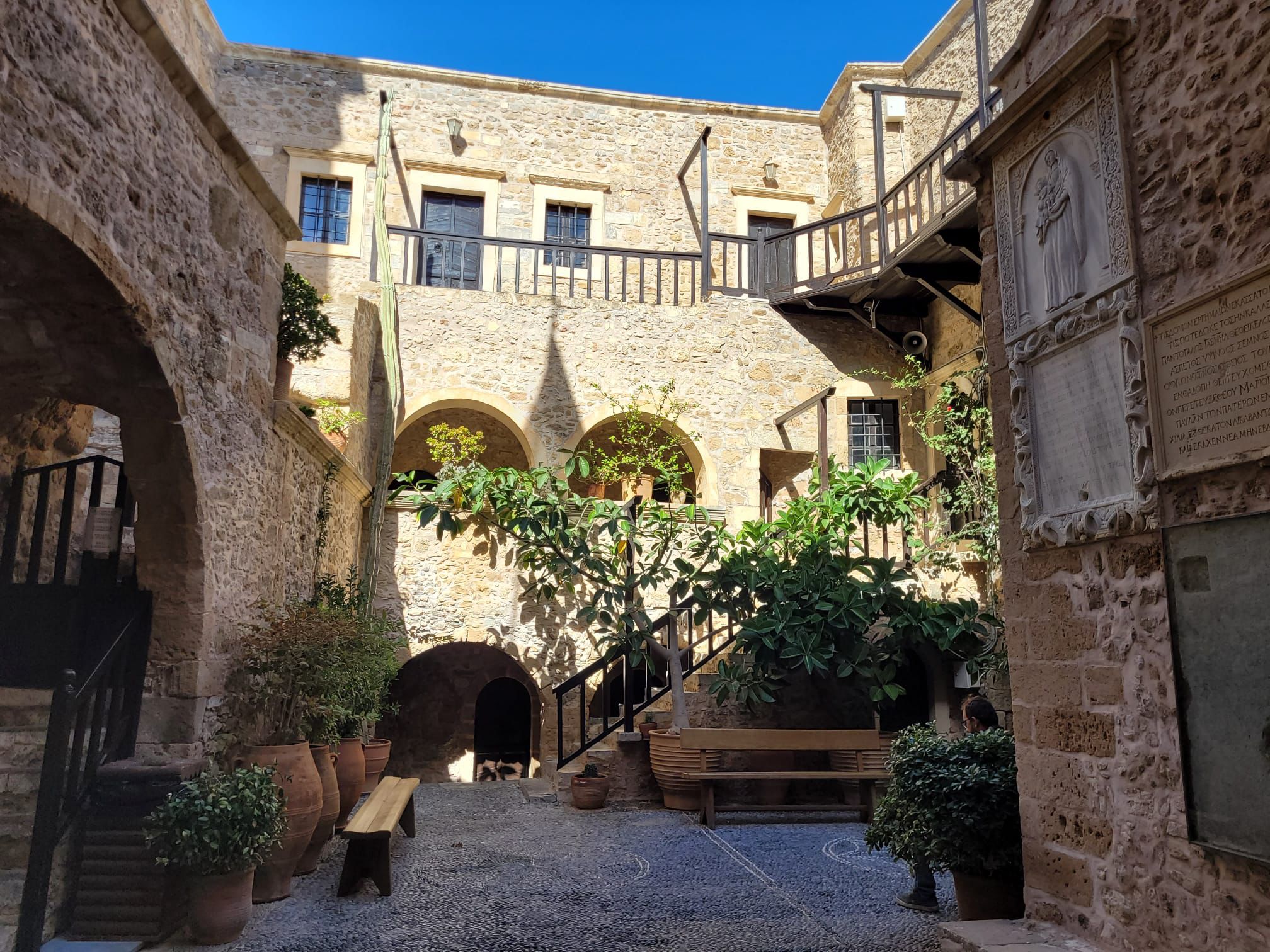
When visiting the monastery, it is worth remembering its defensive character. The entrance consists of two separate gates — a decorative one and a defensive one — separated by a small courtyard. Above the courtyard and surrounding buildings rises a 33 metre high Renaissance bell tower built in the 17th century. The main courtyard is paved with pebbles and decorated with pots of fragrant flowers. It is surrounded by stone buildings with wooden galleries leading to the monks’ cells and communal rooms — the kitchen, dining hall and storerooms. At the centre stands the monastery church. The church is adorned with stone plaques, including one with an inscription from 132 BC (an ancient document known as the Arbitration of Magnesia). The small monastic church (katholikon) contains beautiful 14th century frescoes and 18th century icons. The most precious of them are said to be kept out of sight, stored in the sacristy — including the famous icon “Great Are You, O Lord” painted by Ioannis Kornaros in 1770, composed of dozens of miniature biblical scenes. The monastery also houses a museum presenting its long history. Visitors can see engravings, documents, old Bibles, crosses and seals. There is also an exhibition dedicated to the monastery’s role in the Cretan struggle for independence in the 19th century and during the Nazi occupation. The monks continue traditional agriculture. A restored 19th century windmill at the entrance symbolises this heritage. Today, the monastery’s agricultural estate is far more modern than it appears. Under the Toplou brand, the monks produce olive oil, raki and wine — white (from Vilana and Thrapsathiri grapes) and red (from Merlot, Shiraz and Liatiko). Each year, the monastery’s vineyard produces tens of thousands of bottles, sold both in Greece and across continental Europe. Visitors can taste the wines in the nearby winery and purchase all monastery products and souvenirs. The monastery is open daily from 09:00 to 18:00. Admission costs a symbolic 3–5 euros. There is a small free car park in front. As in all religious sites on Crete, visitors should dress appropriately. Toplou Monastery is located about 15 minutes from Vai Palm Beach (gr. Παραλία Βάι). On 26 September, the monastery celebrates its feast day, marked by a large festival attended by pilgrims from all over Crete.
Mnisi z klasztoru zajmują się tradycyjnym rolnictwem. Ich tradycje rolnicze symbolizuje odrestaurowany, XIX – wieczny wiatrak, znajdujący się przed wejściem do monastyru. Współczesne gospodarstwo klasztorne jest dużo bardziej nowoczesne niż się wydaje. Pod marką Toplou mnisi produkują oliwę, raki oraz wino (białe z odmian vilana i thrapsathiri, oraz czerwone z odmian merlot, shiraz i liatiko). Każdego roku klasztorna winnica produkuje kilkadziesiąt tysięcy butelek, trafiających nie tylko na greckie stoły i na rynki kontynentalnej Europy. Win klasztornych można skosztować w winiarni znajdującej się nieopodal klasztoru. Można tam także kupić wszystkie produkty klasztorne i pamiątki z obiektu. Klasztor jest czynny codziennie od 09:00 do 18:00. Wstęp kosztuje symboliczne 3-5 Euro Przed klasztorem znajduje się niewielki, bezpłatny parking. Odwiedzając klasztor, podobnie jak inne religijne budowle na Krecie, trzeba ubrać się odpowiednio. Klasztor Toplou do palmowej plaży Vai (gr. Παραλία Βάι) dzieli około 15 minut drogi… W dniu 26 września klasztor świętuje, odbywa się wielki festyn, na który przyjeżdżają wierni z całej Krety.