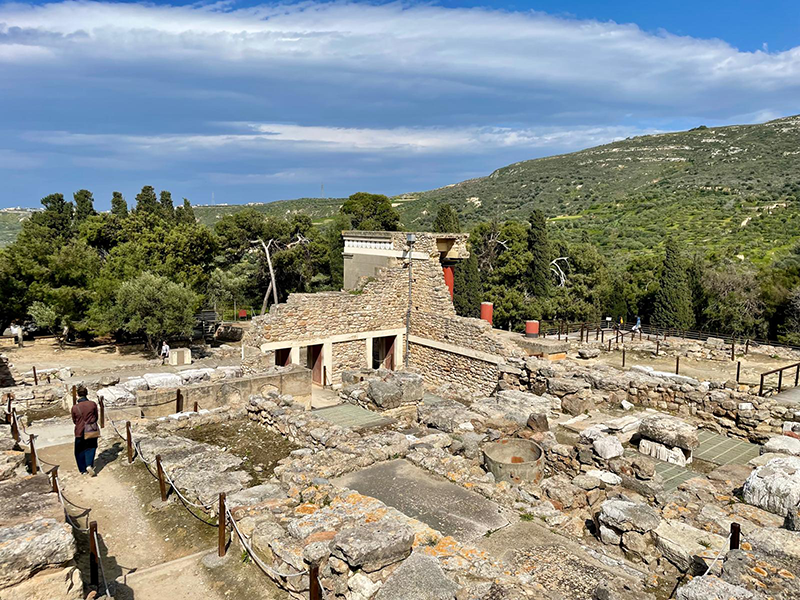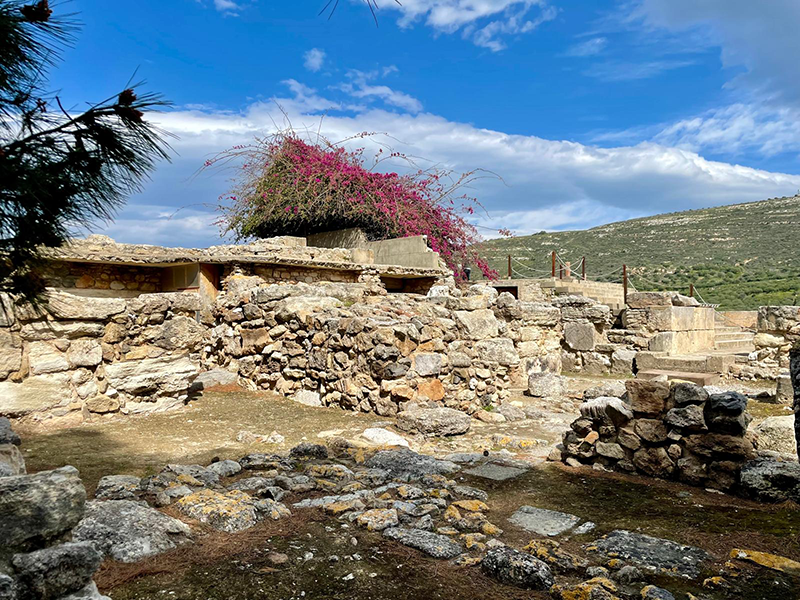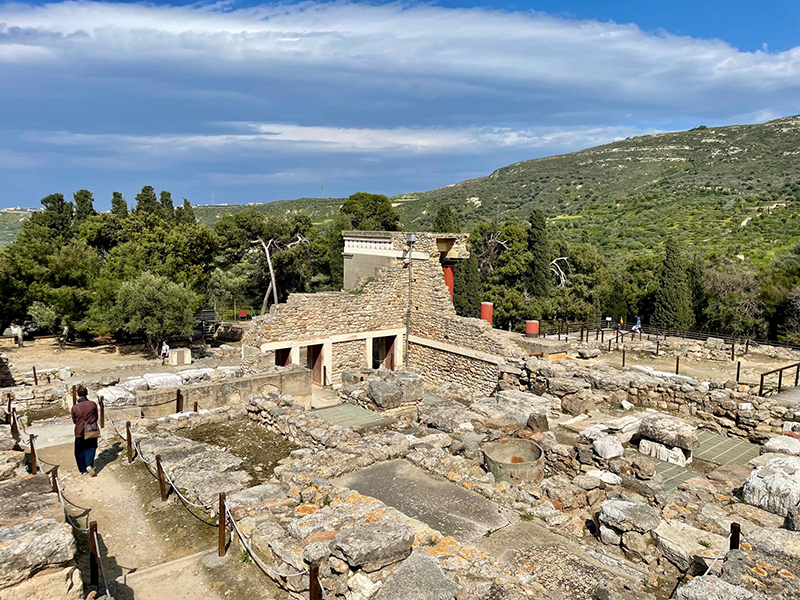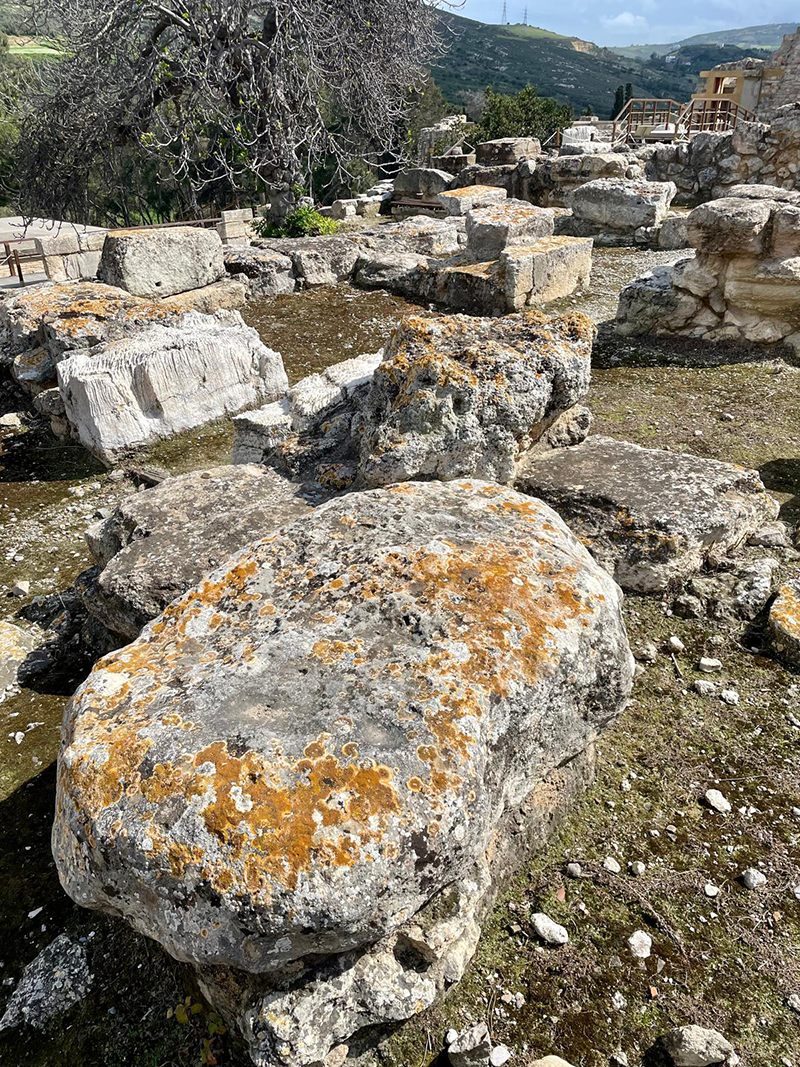
The Knossos complex is the most important centre of Minoan civilisation on Crete and one of the most fascinating archaeological sites in Europe. Considered the oldest city on the continent, it is listed by UNESCO. Located near Heraklion, in the central part of the island, it is the best preserved palace complex from the Minoan period, the earliest civilisation in Europe.
Minoan civilisation developed from 3000 to 1100 BC and left behind many intriguing monuments. Its birthplace was the unique island of Crete. Knossos is regarded as its largest and most important centre, functioning continuously from 2000 to 1400 BC.
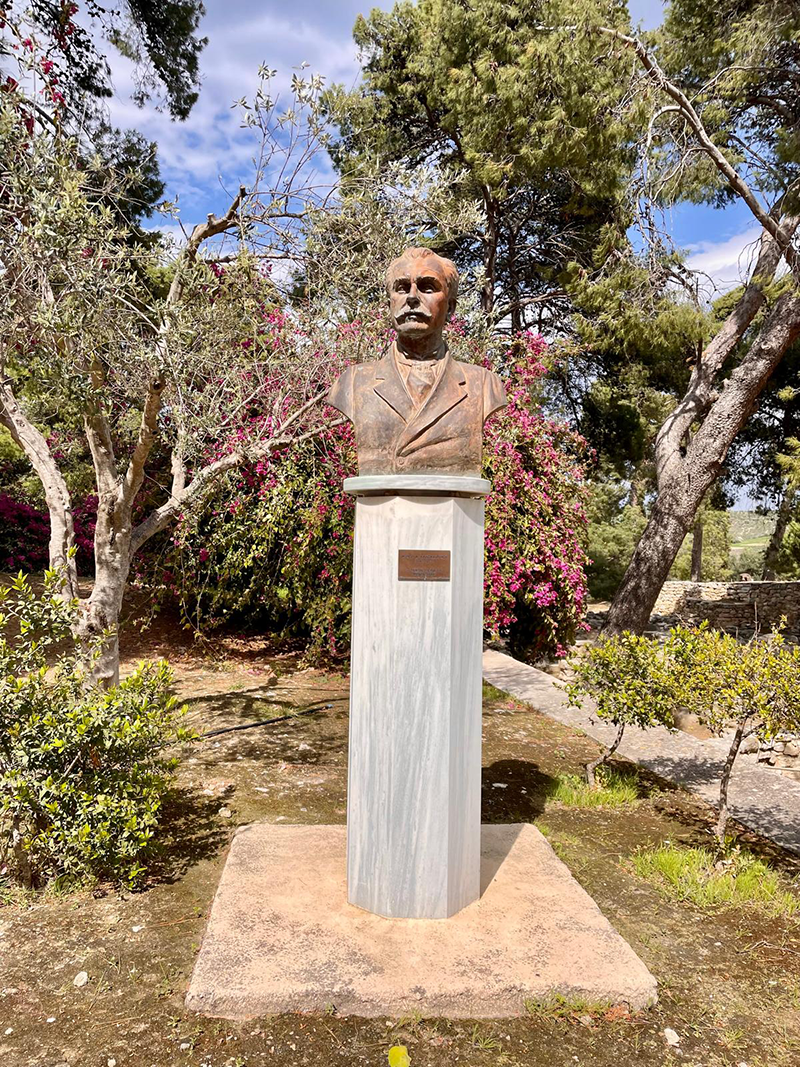
The discoverer of the Knossos complex — covering around 20,000 square metres — was the British amateur archaeologist Arthur Evans (1851–1941). It was nearly discovered earlier by his colleague Heinrich Schliemann, who, following Homer’s clues, found the ruins of Troy and Mycenae. Evans devoted his entire life to Minoan civilisation, beginning excavations in Knossos in 1900. He was fascinated by the possible links between the ruins and the mythological labyrinth of King Minos. The name “Minoan civilisation” refers to this legendary ruler of Crete. Myths of the Minotaur, Theseus and Ariadne, and Daedalus and Icarus are all connected to his reign. Scholars believe that “Minos” may not have been a personal name but rather a dynastic title — similar to “pharaoh” in Egypt.
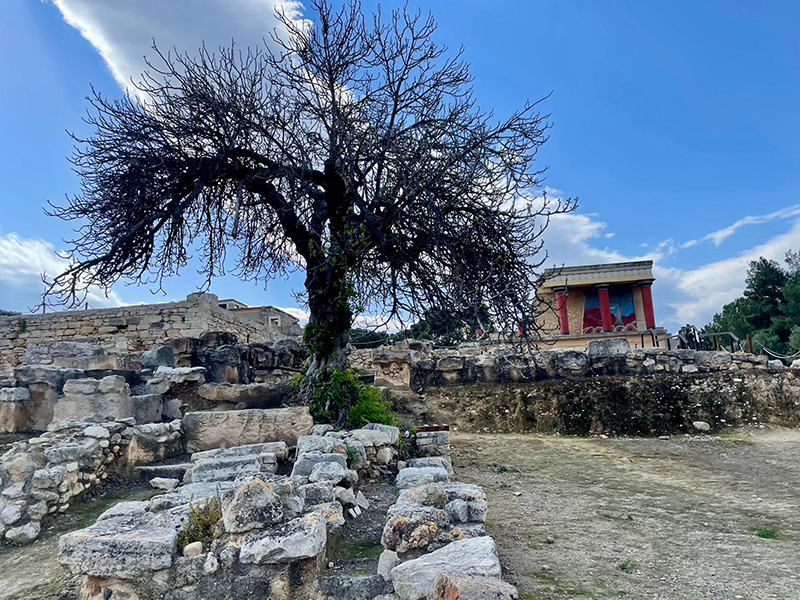
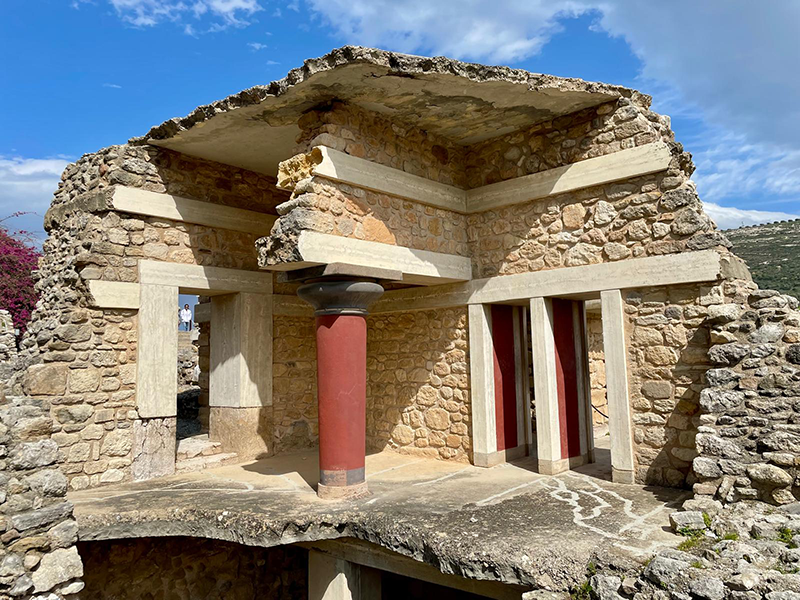
The Minoans maintained many trade and political connections with neighbouring cultures. Their civilisation extended beyond Crete. Researchers study their links with the later Mycenaean culture and with the island of Thira (Santorini), where the ancient city of Akrotiri flourished. Some scholars trace the beginnings of Minoan culture to the massive volcanic eruption on Santorini around 1650 BC. The final blow to the civilisation was likely the invasion of the Mycenaeans from the mainland. The first destruction of the palace occurred around 1700 BC, with further destructions in the 15th and 14th centuries BC.
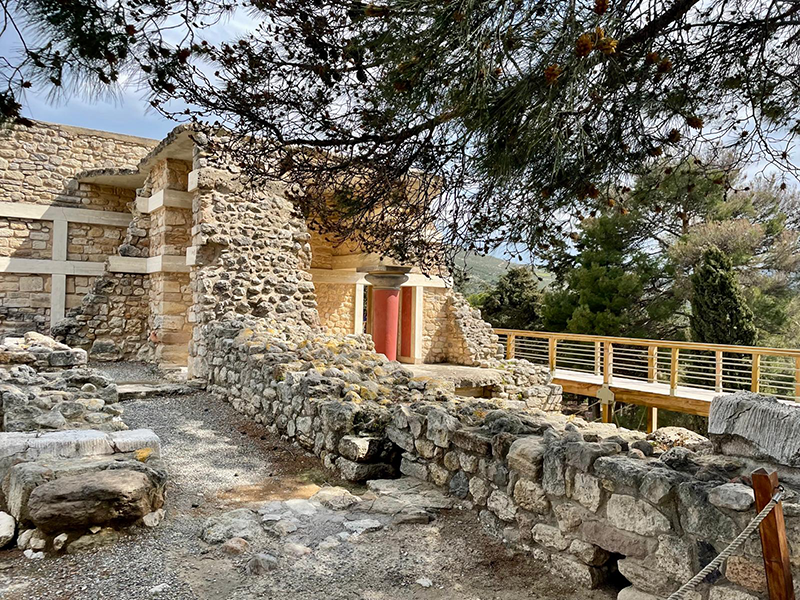
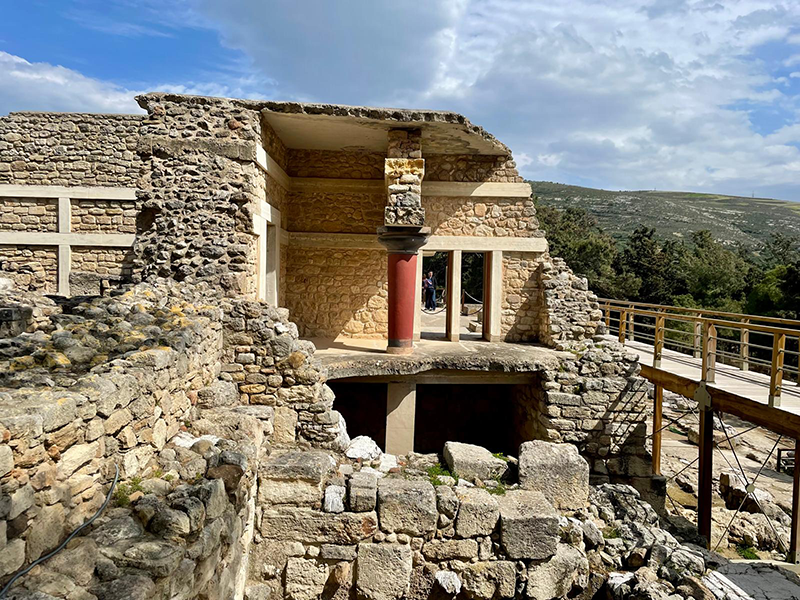
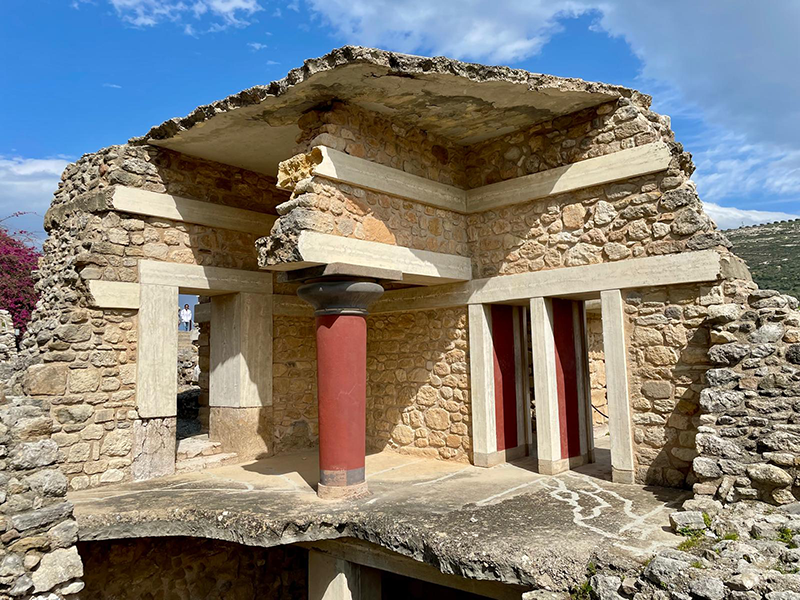
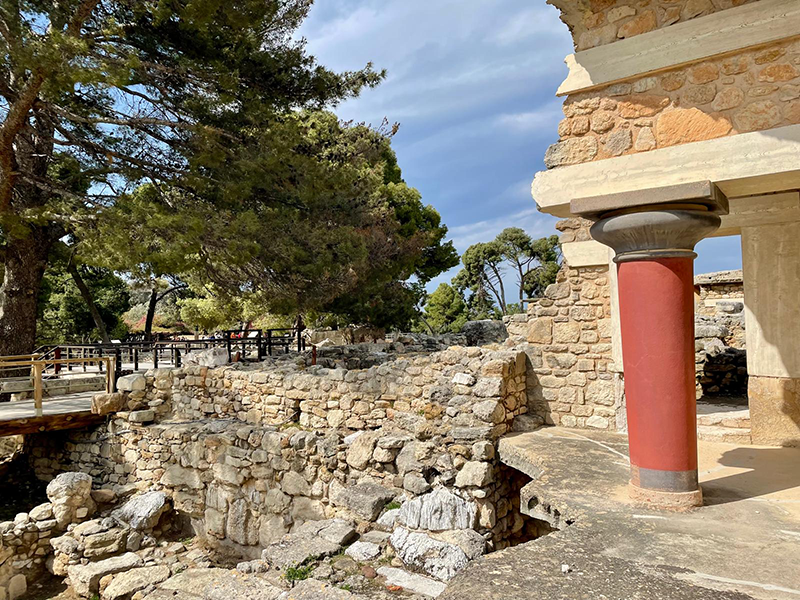
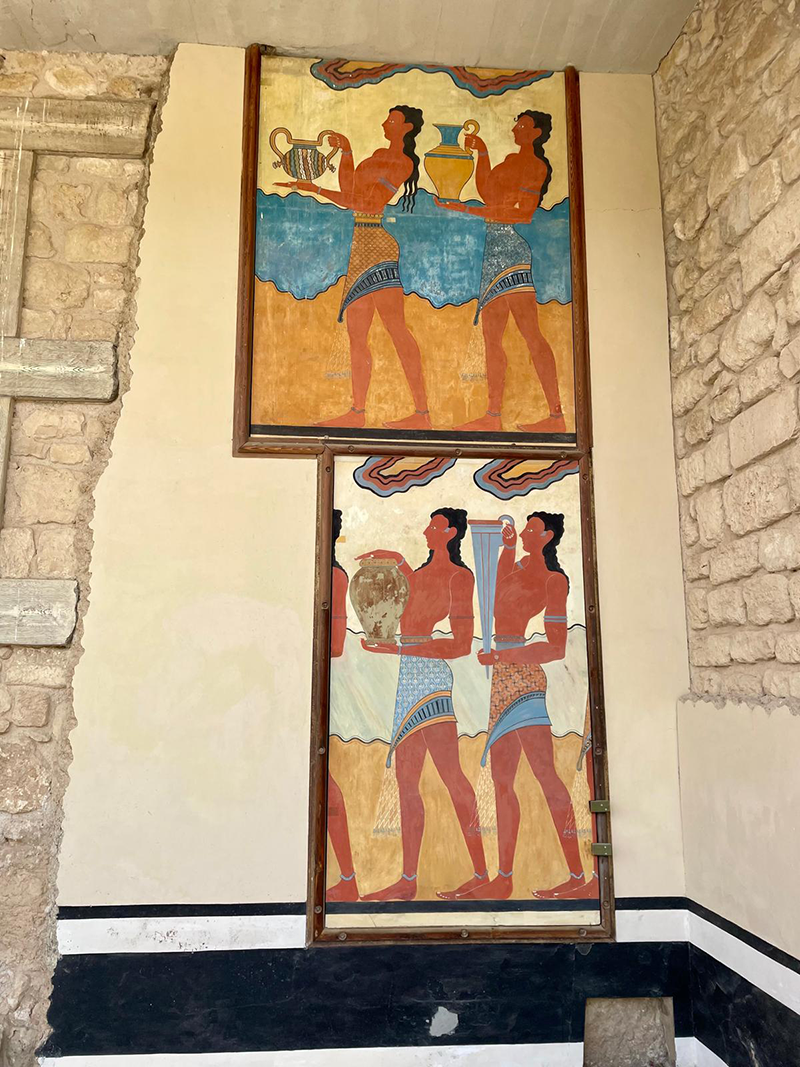
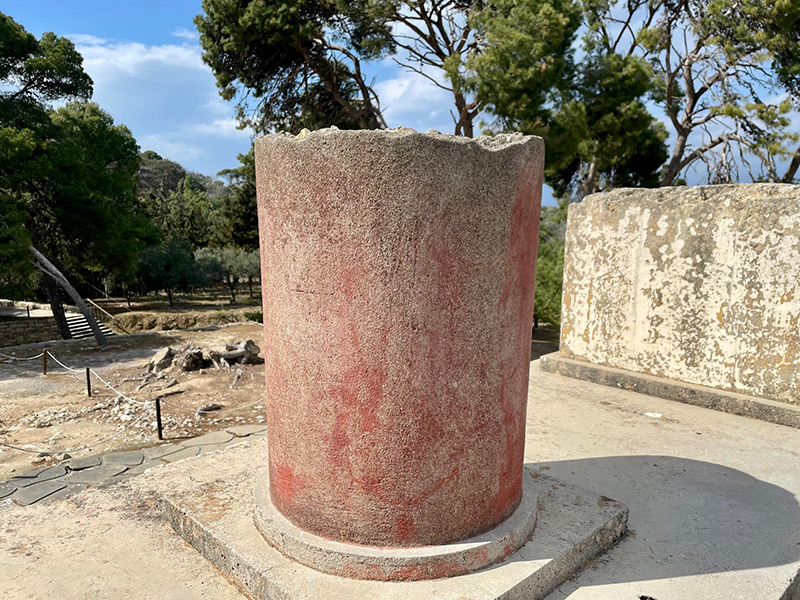
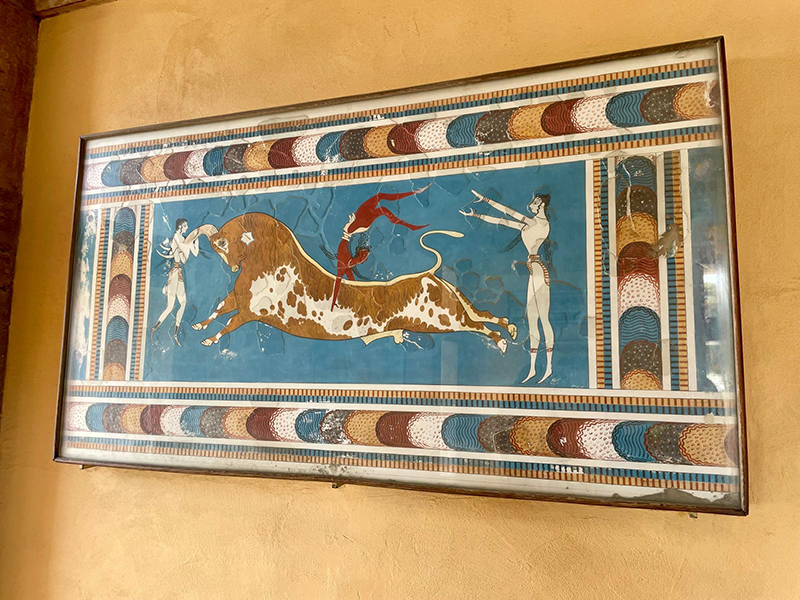
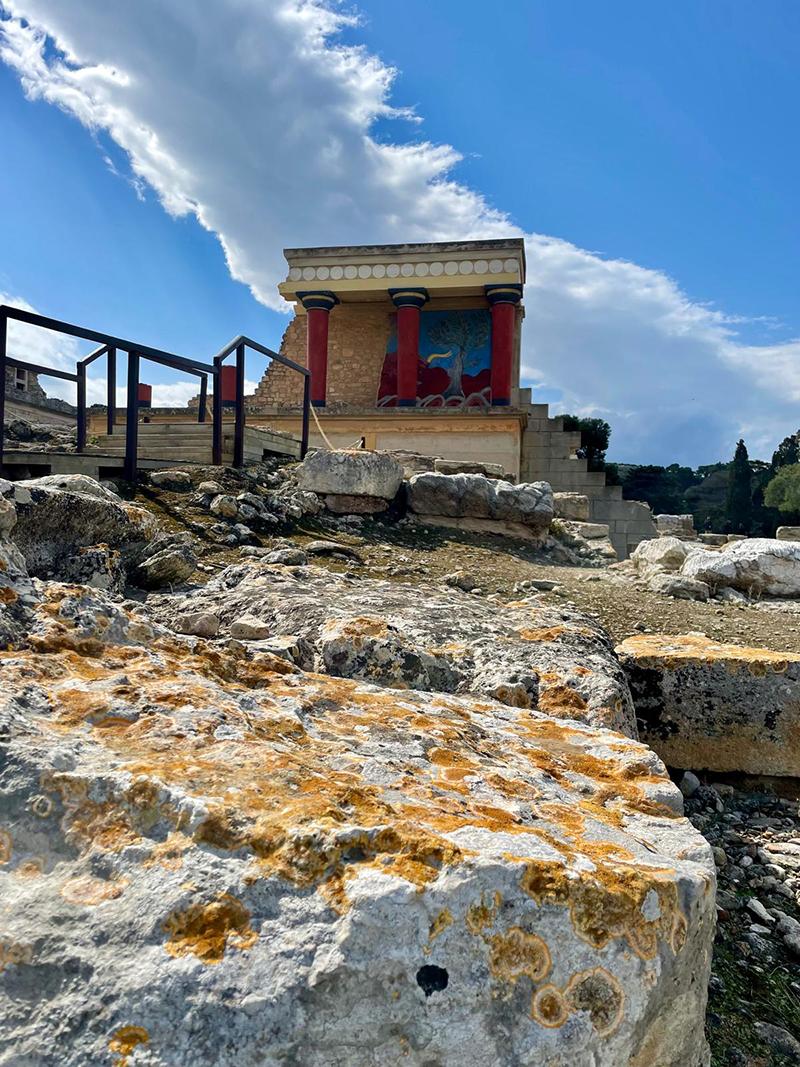
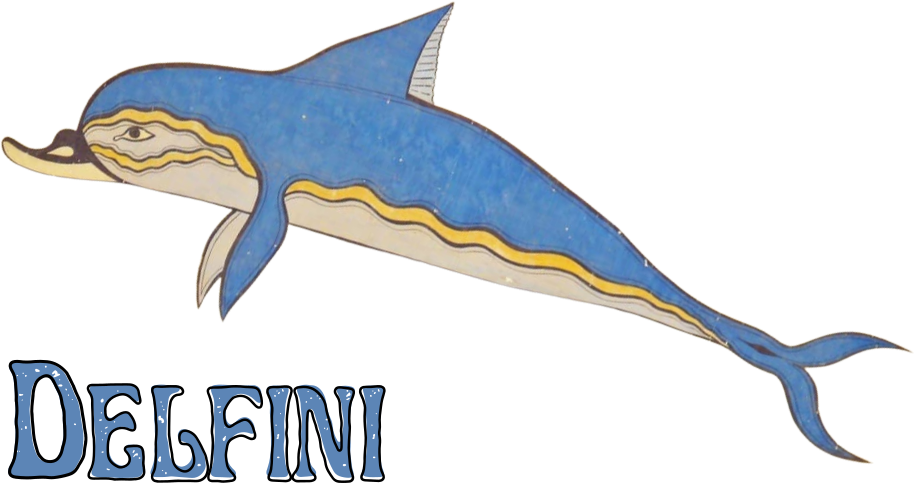
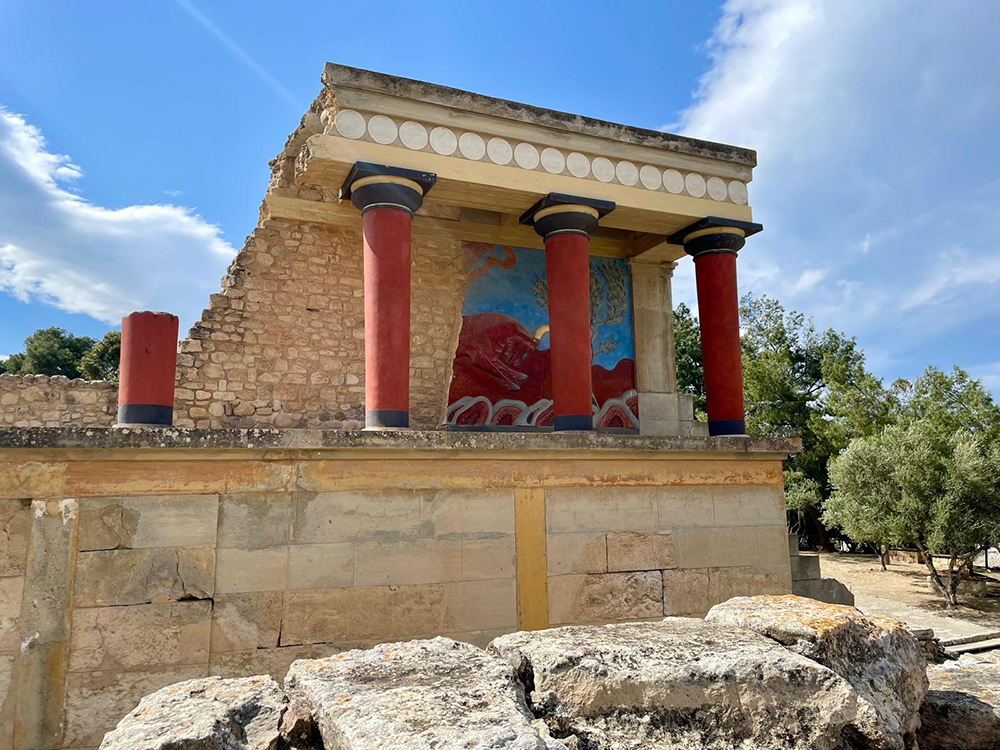
Evans’ work resulted in concrete reconstructions at Knossos and freely interpreted frescoes discovered in the ruins. Decorative paintings with numerous plant and animal motifs were found. One fresco shows a man leaping over a bull — likely depicting tauromachy, a ritual spectacle characteristic of Mediterranean cultures. Crete also yielded figurines of women with exposed breasts (probably priestesses or goddesses) holding snakes.
For a long time, these artefacts led scholars to believe the Minoans were a peaceful, somewhat hedonistic society in which women played a significant role. However, the writing systems used on Crete have not been fully deciphered. And this was not a purely peaceful civilisation — the symbol of Knossos was the double axe, and the island is full of ancient weapons and traces of fires and battles.
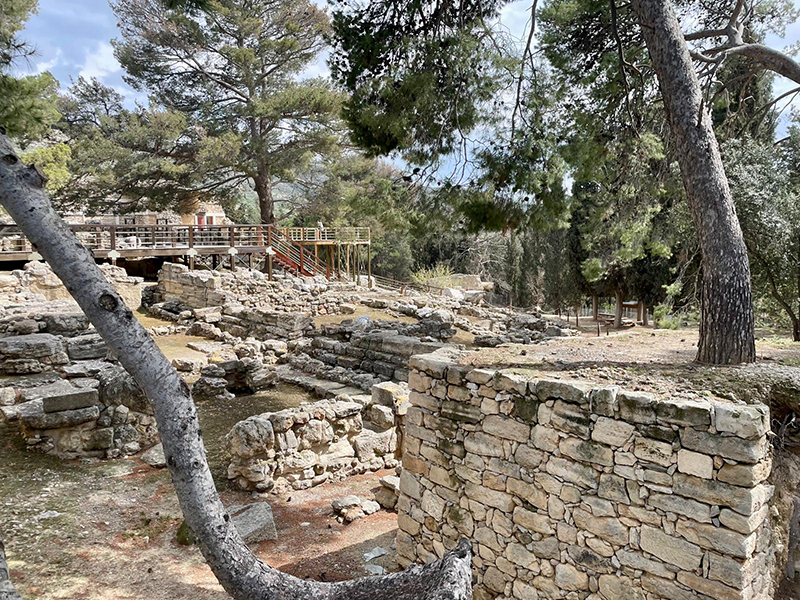
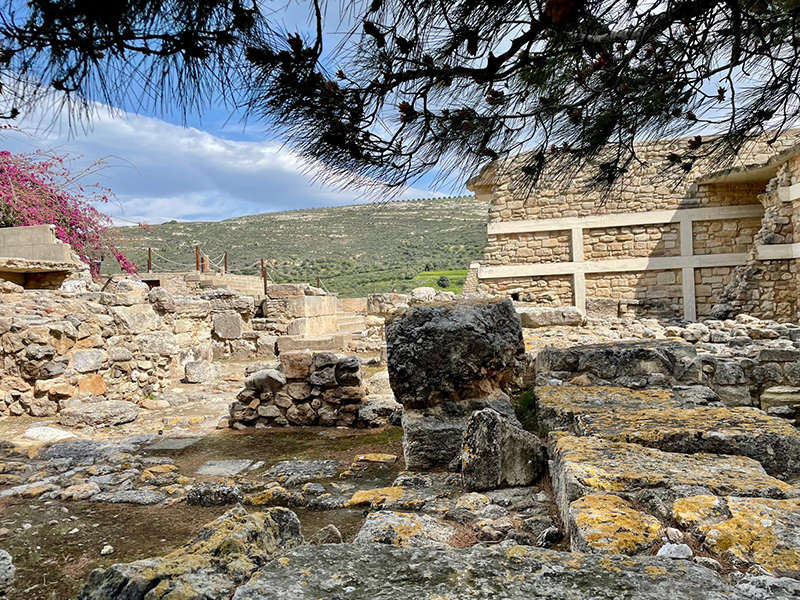
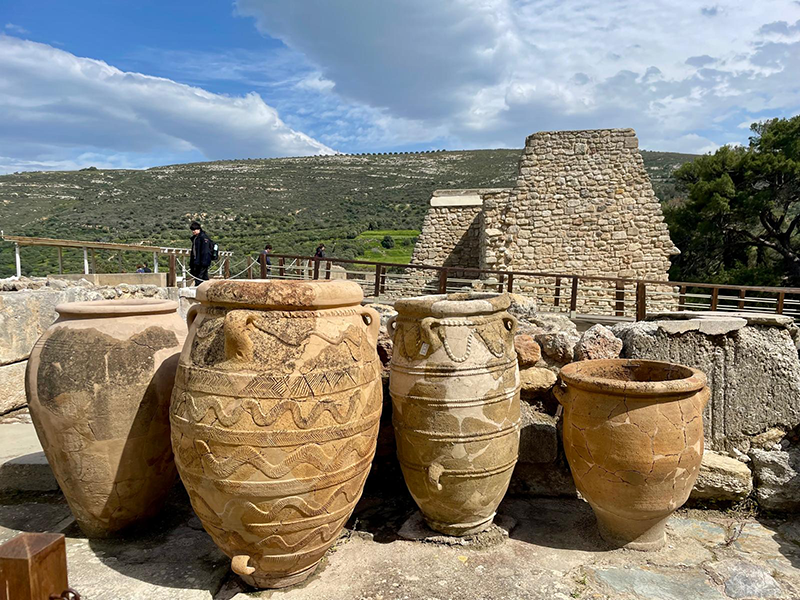
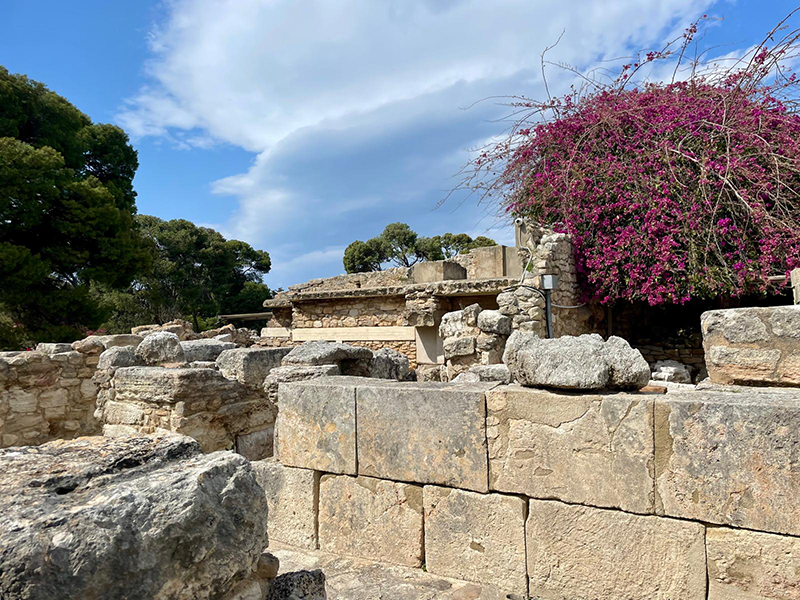
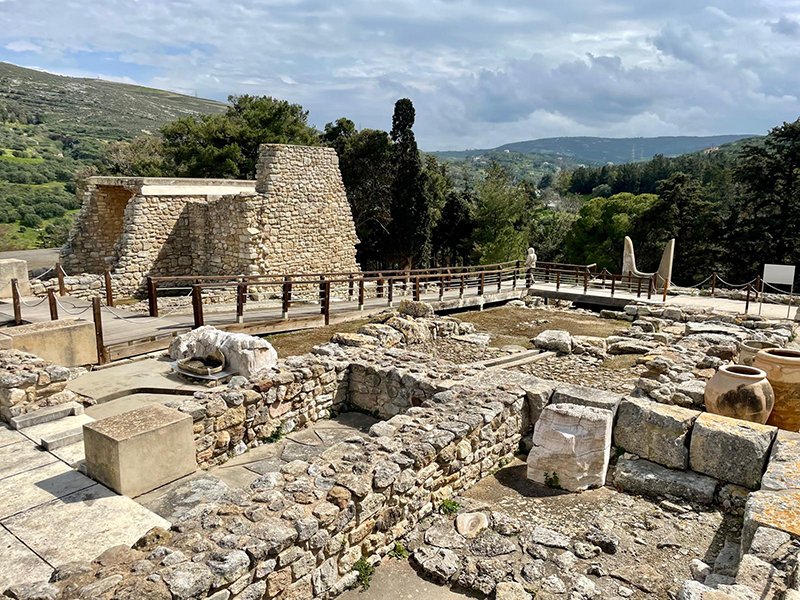
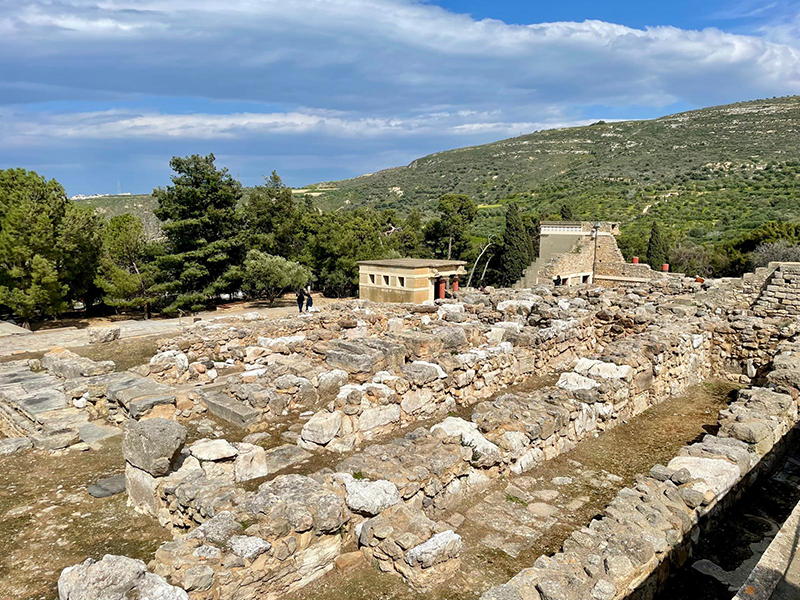
Knossos is commonly called a palace. Visitors can see the throne room, ceremonial chambers, royal apartments, temples, guardrooms and storerooms. Much of this is a free interpretation of the ruins. To some researchers, the numerous buildings, corridors and passages resemble the mythological labyrinth built for Minos by the ingenious Daedalus — the place where the Minotaur, half man and half bull, was said to hide.
The truth remains unknown — there are studies and theories. Whatever the case, today the Knossos complex is a magnet for travellers, and everyone can find their own version of its story.